Key takeaways
- SeedHunter operates two core services: a marketing module for influencer campaigns and a funding module enabling early-stage project fundraising with digitalized processes.
- The platform reduces barriers to entry by allowing retail investors to participate in seed rounds with as little as $50, compared to traditional minimum ticket sizes of $5,000-$10,000.
- All projects on SeedHunter undergo due diligence including business plan review, team verification, KYB compliance, tokenomics analysis, and background checks before listing.
- Seed round investors typically pay approximately 50% less per token than the public TGE price, providing immediate profit potential upon token launch.
- The platform provides structured project research pages with pitch decks, whitepapers, tokenomics, and underlying documents to enable retail investors to conduct independent due diligence.
The seed-round access gap
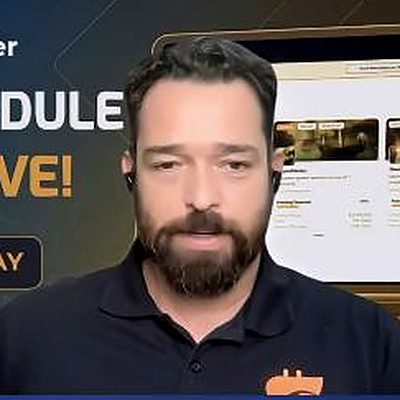
Ashton Addison: What is SeedHunter, and why did you build it?▶ 00:22
Alex Barros: The idea came from our own experience. My co-founders and I have spent a long time in the crypto space, and we saw a lot of potential but also some inefficiencies in the market. We built SeedHunter to make collaborations easy, secure and scalable for everyone. We have two core services. The first is a marketing module, where projects create influencer campaigns, influencers take part, and everything is digitalized. A matching algorithm checks parameters like social metrics and how real the influencers' follower bases are, and it helps set a price. The second is the funding module, where projects create early-stage rounds, mostly pre-seed, seed and private. We want to make it easier for projects to raise the money they need to develop, and for the community to participate.
Ashton: Why is it so hard for ordinary investors to get into seed rounds?▶ 02:37
Alex: Usually you either never hear about a project until it's already on the exchange, or you struggle to assess it. Projects do everything manually: talking to investors, pitching to different groups and negotiating every contract. So they keep rounds restricted and demand higher ticket sizes, usually starting from $5,000 to $10,000. The community often doesn't know a round is happening, or doesn't know the right people, or doesn't have that kind of money. Evaluating a project is hard even for experts, because you don't have access to the team to ask the difficult questions. Projects come to us because they want to raise money with us, so we have an open channel to ask those questions and request documents that prove they are who they say they are. Then we accept only the ones we see real potential in.
We can only promote to our community something we also believe in and would feel comfortable putting money into ourselves.
Due diligence and what gets listed
Ashton: What does a retail investor with a small amount of capital get from SeedHunter?▶ 04:58
Alex: You find different types of early-stage rounds, and every project has already been through our due diligence. We check the business plan and the team. Projects go through a KYB process, so they need an incorporated company and the legal requirements met. We also check the tokenomics and token utility and run a background check. Most likely they have convinced other VC companies and partners too. You still need to do your own research, so our project research page puts everything in one place: the underlying documents, tokenomics, pitch deck and white paper. Participating takes a few clicks, and you see how many tokens you get and what you pay for each. On average you pay about 50% less in a seed round than in a public round. You can start with $50 or $100 to test it out. Since we're launching, we're also adding a $10 incentive every time you participate.
Ashton: Which kinds of Web3 projects are you most bullish on, and what would you turn down?▶ 08:12
Alex: First of all, a project needs a unique idea that people really benefit from using. It must pass KYB, the team needs to be experienced, and the revenue model needs to be on point. We have a lot of gaming projects coming up and a strong network there, because the number of gamers keeps growing and users can have fun and also profit. AI, layer 1 and layer 2 solutions, and DeFi are also strong with us. We don't block categories, but we only accept projects we would also participate in. We can only promote to our community something we also believe in and would feel comfortable putting money into ourselves. Anything related to weapons, drugs or gambling is vetoed directly, as is anything we recognize as a scam during due diligence.
Launchpads, liquidity and risk
Ashton: How is SeedHunter different from a traditional crypto launchpad?▶ 13:08
Alex: I wouldn't say it's better. We help projects get ready for launchpads. We are a few steps earlier. By the time a project reaches a launchpad, it usually needs an existing community, a white paper and a product well into development. Projects run seed rounds to get those things, because they need money to finish the product and do marketing. We merge the two. Because we reduce the manual workload, projects can accept lower ticket sizes. They negotiate with us once, do the pitching with our account management, and finalize the legal setup. After that everything on the platform happens automatically. If a project raises $100K with an average participation of $50, that's already 2,000 people following and engaged with it. You are raising funds and you are building the community at the same time.
Ashton: Seed investments aren't liquid until launch. How long is the wait, and what are the risks?▶ 17:41
Alex: It varies a lot. A project can only launch at the right time, and that depends on its own product development and marketing, but also on market sentiment, which is out of its control. Generally, the sooner the TGE is confirmed, the better for participants. But that pulls against the seed price and the discount you can get, and you have to balance the two. Bitcoin is an established project, so the chance it grows 100x is very low. People who got in during its first years took more risk because nothing was certain, but the growth was higher. Seed rounds work the same way: the earlier you get on board, the higher your chances, but the project may not develop, or something may happen in the market. We can evaluate the basics and the metrics to be on the safer side, but this is a high-potential participation, and with that comes a certain amount of risk.
You are raising funds and you are building the community at the same time.
Market outlook and roadmap
Ashton: How optimistic are you about the crypto market heading into the rest of 2024?▶ 22:23
Alex: I'm very optimistic. I think there is no going back anymore. We'll have market oscillations, as in traditional finance, but there are so many good signs: the ETFs, the adoption, the participation of big investors and companies, and how many of them are integrating blockchain technologies into their business models. I think this year is going to be a full bull run, and I don't think it will go down any time soon. The technology has proven itself and has real-life uses, in areas like real estate, medicine, data security and gaming. It's just a matter of time until more people discover it and trust it.
Ashton: What is on SeedHunter's roadmap?▶ 25:03
Alex: We want to focus on optimizing the platform and on brand awareness, so people see that we are serious and trustworthy. We also want to offer the community very good seed rounds. We already have three projects in the pipeline, and the idea is to publish two to three high-potential rounds a month. For projects, we want to be a partner beyond fundraising and marketing. If they need a referral for a market maker, a legal firm for setup or KYB, or accounting services, we have people who can jump into the conversation. For high-potential projects, we can also open communication with VC companies. We want to push the right projects so they have what they need to succeed and can concentrate on their core business model.
This interview has been edited for length and clarity. Recorded July 2024.