Key takeaways
- Decent Labs operates as a Web3 venture studio focused on creating and deploying communities rather than traditional companies.
- Speed of project scaling through communities and social media is the most tangible difference between Web3 and Web2 investments.
- Investment decisions should prioritize actual technology usage and fundamentals over hype and early investor interest.
- On-chain fundraising offers transparent and equal deal terms to all participants compared to traditional venture capital negotiations.
- Sarcophagus is a dead man switch protocol functioning as a DeFi building block with programmable use cases beyond traditional wills and trusts.
Why a web3 venture studio
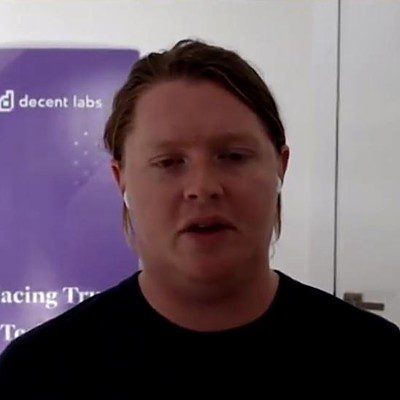
Ashton Addison: What is the philosophy behind Decent Labs, and why did you found it?▶ 00:24
Parker McCurley: Decent Labs was founded in 2017, during the first big Ethereum bull run, when decentralized projects were struggling to get off the ground. Both founders were frustrated by what happened in the 2008 financial crisis, and by how centralized authorities had made a mess of our financial system time and time again. That led us to cryptocurrency. Open source software can empower individuals and unite communities, and centralized financial systems can be predatory and dangerous for individuals. We've been building in the space for almost five years now.
Ashton: What is the biggest difference between web3 and web2 investments?▶ 01:17
Parker: We've worked on the whole gamut, from startups building centralized companies and software that leverages cryptocurrency to fully decentralized, open source web3 projects. The most tangible difference I've seen is speed: how fast projects get off the ground, how fast they scale through communities and social media, and how fast finance comes into play, whether that's funding, liquidity or the ability to incentivize people to contribute. That's why, as a venture studio, we're seeking not to create and deploy new companies but to create and deploy new communities online.
We're seeking not to create and deploy new companies but to create and deploy new communities online.
Choosing and funding projects
Ashton: Beyond speed, what do you look for when deciding where to invest?▶ 02:56
Parker: For me it has always been usage. In 2017 I saw many projects with a lot of hype and investor interest where I couldn't see a technical value or use case, and a lot of those have withered away over time, even if they were highly valued early on. Other projects got little hype early but had strong fundamentals and the right team, and I've watched them flourish over the years. I don't make many investments outside our own work. When I do, it's usually because we've found a technology that is very valuable and that we use ourselves. When we find ourselves using something to create other decentralized applications, it's safe to say other people are using that protocol or tool too. We're also working on a tool to help builders and investors with this, called Satori, an analytics platform for the Ethereum blockchain and other EVM-based networks.
Ashton: How does on-chain fundraising differ from traditional VC fundraising?▶ 05:14
Parker: It's popular right now to hate on venture capital, and there are plenty of ways to improve how the technology industry works. But there are real benefits to raising venture capital, including access to sophisticated minds who have seen companies grow before and can help you grow yours. Where VC meets web3, we want a level playing field, with individuals and institutions getting the same access to investment. We also want to keep the standard that when you capitalize a project, you're looking for partnership and support from investors who can offer it. At a bare minimum, the benefit of on-chain fundraising is that everyone participating gets an equal and transparent deal, with no backroom conversation. As a space, we still have a lot of work to do on building systems that support multiple levels and types of investors.
Sarcophagus and the dead man switch
Ashton: You've worked with Sarcophagus. What is it, and why did you back it?▶ 07:57
Parker: Sarcophagus was one of the earlier groups that saw our model and wanted to collaborate with Decent Labs. It's a dead man switch: a mechanism that is triggered when its creator is incapacitated. A will, a trust or an escrow agent are the familiar examples. But as a DeFi building block and protocol, we've only addressed the tip of the iceberg of its use cases. New ones are found every day because you can integrate with it programmatically through other smart contracts or systems on Ethereum. Almost every month there's a news article about someone who couldn't secure their cryptocurrency, and after their death their family and loved ones are left without access to those resources. That's a terrifying situation. It also has uses outside the United States, such as in more oppressive countries, where privacy and freedom activists have plenty of use cases.
A lot of the most exciting things this year won't be created by corporations or traditional startups, but by open source and online communities.
2022: consumer DeFi and DAOs
Ashton: Which trends in DeFi, NFTs or web3 are you watching for 2022?▶ 10:24
Parker: I'm a total DeFi and fintech nerd. What was exciting in 2021 was not only the establishment of DeFi but also what NFTs, art and gaming did to bring exciting content on-chain to consumers, in a way finance still hasn't managed for the typical layman. This year I'm most interested in how DeFi can learn from that and build consumer applications that excite and inspire everyday people. When Venmo came out, being able to split a bill after dinner was a big deal and felt really exciting. I want to see us take the powerful tools DeFi has given us and deliver them in user experiences that are engaging and get people hands-on with the technology.
Ashton: What would be the best-case scenario for Decent Labs this year?▶ 11:59
Parker: Years ago, we started with a vision of transparent financial systems that could stop things like 2008 from happening again. There were bumps along the road where I wondered whether this technology would simply be consumed the way others have been, and whether the ideological vision for Bitcoin wouldn't work. Five years later, DeFi is a testament that fully decentralized organizations, software and tools can support an alternative economy. Looking into 2022 and a few years beyond, I'm most excited about DAOs as a superior model to the company for creating an institution. The decentralized future where someone has a few freelance gigs working for a few different DAOs is a lot closer than we once anticipated. A lot of the most exciting things this year won't be created by corporations or traditional startups, but by open source and online communities.
Ashton: What is next for Decent Labs, and how can the community get involved?▶ 14:27
Parker: My program this year is, as usual, to hold and build, which is what we've been doing for a long time. If you want to get involved, join our Discord and chat with anybody on the team. We're releasing a lot of new DeFi protocols within the Decent Labs ecosystem in 2022, and we'll also be announcing the tokenization of Decent Labs itself.
This interview has been edited for length and clarity. Recorded January 2022.