Key takeaways
- Eclipse uses Solana's virtual machine to run applications while obtaining security from external blockchains like Ethereum or Celestia rather than Solana's consensus.
- The platform starts as an optimistic rollup with plans to transition to zero-knowledge proofs, allowing users to challenge false transactions and earn rewards.
- Eclipse targets high-throughput consumer applications where cryptocurrency is essential to functionality, not applications that could work without blockchain.
- End users interact with Eclipse through standard Solana wallets without knowing the underlying security source, though advanced users can track transaction finalization across multiple chains.
- Eclipse offers customizable security by letting developers choose which blockchain provides settlement, decoupling the virtual machine from the security layer.
From Terra to Solana VM rollups
Ashton Addison: What is your background, and what led you to start Eclipse?▶ 00:20
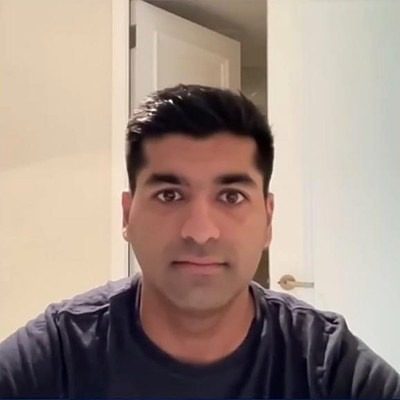
Neel Somani: My background is in engineering. I was a software engineer at Airbnb, and I worked at Citadel as a quantitative researcher in the Commodities group, on things like power and gas. That's not directly related to crypto, but there are some interesting overlaps, especially now that people are talking about frequent batch auctions and all sorts of market structures. In March I quit and started building an EVM on Terra. It was going great at first, but I scrapped that project. Now I'm working on something I think is much more exciting: trust-minimized Solana VM rollups that you can deploy to any chain for security.
Ashton: How would you explain what Eclipse does to someone who isn't a developer?▶ 01:21
Neel: The first part is how we run programs, which we borrow from Solana. We use the Solana virtual machine, so if you have a Solana application you can deploy it directly to Eclipse and it runs as you intended. The second part is security. We throw away Solana's consensus, which is the part that typically requires most of the nodes to be honest. We relax that assumption: only a minority of the nodes on your network need to be honest and reliable. We have a protocol that interacts with L1s in a very generic way to build a customizable rollup. A block of transactions produced on our Eclipse VM gets posted to Ethereum, Celestia or another data availability layer, which you use for data storage and security.
Right now, if something could be built without crypto, it probably should be.
How the rollup design works
Ashton: How do rollups stay secure without every node checking every transaction?▶ 02:41
Neel: At a high level there are two options: optimistic settlement or zero-knowledge settlement. In the optimistic case, the execution node, or sequencer, runs a batch of transactions, produces a block and says this is the final result. You accept it as true, but anyone can watch those transactions. If something is false they can contest it, and if they're right they get paid a big sum while the person who proposed the false block loses a lot of money. In the zero-knowledge direction, you generate a proof that the program you ran is provably correct. We're starting as an optimistic rollup and will become a zero-knowledge rollup in the long run.
Ashton: Does using Eclipse change the security model compared with running a normal Solana app?▶ 06:59
Neel: The security assumption that changes is that you can rely on the security of Ethereum but run Solana code and get Solana speed. Or you can swap Ethereum out for any other chain. It's a customizable rollup where you pick who you're trusting, rather than being tied to the chain of the virtual machine you're using. Typically an EVM rollup runs on Ethereum, and people would expect a Solana rollup to get security from Solana. Here we're allowing you to mix and match.
Ashton: How does an app chain differ from a traditional dapp on a layer one?▶ 09:22
Neel: On Ethereum or Solana, one node runs the program and propagates the result to all the other nodes. They execute it too and come to consensus on the final result. They also have to store the result, so that if someone asks days later about the status of a transaction, it can be retrieved. We've broken those pieces up. The party that executes the transaction is not the one verifying it was executed correctly, and neither is the one storing the data. Those are three different functions: consensus, execution and data availability.
Who builds on it, and what they build
Ashton: What stage is Eclipse at, and is anyone using it yet?▶ 05:21
Neel: We're going to have a public testnet in January. A few select teams who reached out really early, building exciting consumer applications, have already been given early access. I want to see consumer applications where crypto is at the core and you can't remove it without destroying the application. Right now, if something could be built without crypto, it probably should be. So we want apps that remove a third party that can't be trusted, encourage cooperation in a way that's not possible in Web 2, or play with identity to prevent embarrassment or fraud for the user.
Ashton: How easy is it for developers to move an existing Solana app to Eclipse?▶ 10:24
Neel: They should be able to use the same exact CLI. They point their command line interface at our network and deploy as usual, so it should be seamless. In the long run we'll have our own CLI, which will be necessary when people want to configure their app rollup more specifically, for example the number of sequencers or memory and core requirements.
Ashton: Will most apps built this way be DeFi, or do you expect other categories to grow?▶ 12:31
Neel: DeFi is okay, but I'm tired of seeing yield farms and all the same stuff. I want this to be a blockchain for the most imaginative developers to build consumer applications that we haven't seen before. I think the main reason we haven't seen those applications is that they don't have enough throughput. Now we're giving them the full Solana VM for themselves.
I want this to be a blockchain for the most imaginative developers to build consumer applications that we haven't seen before.
This interview has been edited for length and clarity. Recorded October 2022.