Key takeaways
- Metis is a Layer 2 scaling solution for Ethereum that pioneered moving data availability off-chain and recently launched the first decentralized sequencer pool for an Ethereum L2.
- Metis uses its native METIS asset for both gas fees and network security through staking, differentiating it from most L2s that rely solely on Ethereum.
- The protocol supports liquid restaking tokens through partnerships with Lido, allowing users to stake assets and utilize them across DeFi applications simultaneously.
- Metis launched a 4.6 million METIS Ecosystem Development Fund to support projects with capital, audits, and resources across business, development, and marketing verticals.
- Key DeFi applications building on Metis include Hercules Exchange, Wagmi, and Aave, with the protocol offering grants and close support for projects entering the ecosystem.
What sets Metis apart
Ashton Addison: What is Metis, and what makes it unique?▶ 00:44
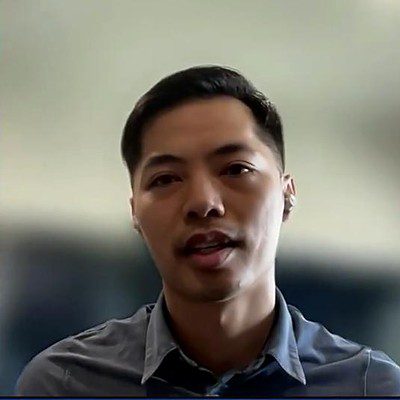
Tom Ngo: Metis is L2 infrastructure for scaling Ethereum. It was created to expand on the ideals of why blockchain and Ethereum exist, and three founders came together to build it. We've been able to pioneer and push the boundaries of what an L2 can do. We were one of the first networks to move data availability off chain, so modularity has been in play since the early days. We also recently launched the first sequencer pool for an Ethereum L2.
Ashton: With so many layer 2s now, what makes one good, and how should builders and users choose between them?▶ 01:41
Tom: We're all unified by the same reason: making the Ethereum experience faster while solving the security and scalability issues of blockchain itself. On the infrastructure side we're similar in many ways. What makes Metis unique is a very mature ecosystem and a mature economic model. We use the METIS token not just for gas and governance, but also to secure the network through the sequencer. We're also heavily into DeFi, which we see as a really big sector for blockchain.
If the sequencer goes down, the network stalls.
Decentralizing the sequencer
Ashton: Where does the Metis mainnet stand today, and what comes next?▶ 13:57
Tom: Metis started as an optimistic-based code stack and has evolved into its own tech stack, which is totally unique to us. We moved data availability off chain, and recently we opened up the sequencer pool and rotation, which is an industry first. Next is phase two of the decentralized sequencer, where we'll integrate a rewarding mechanism for supporters of the network. Looking toward Q3 and Q4, we expect to be one of the first chains with a hybrid rollup that combines optimistic and ZK proofs.
Ashton: What is a sequencer, and why does decentralizing it matter?▶ 14:45
Tom: Most L2s currently operate with a single sequencer, which creates a risk of censorship. If the sequencer goes down, the network stalls. There are ways to interact with L1, but it isn't a fluid experience and liveness is affected. Liveness, immutability and censorship resistance are the ethos of blockchain, so I think this is the evolutionary step an L2 should take.
Staking, interoperability and adoption
Ashton: Metis describes itself as "super fluid and self-sustainable." What does that mean?▶ 02:53
Tom: Super fluid means creating an environment where capital and assets are expandable, with a native asset securing the network. Our partnership with EigenLayer opens up a layer of LRTs, which is unique. Most L2s rely on Ethereum, while Metis uses the METIS asset to secure the network. With EigenLayer we'll explore dual staking, combining METIS as a security aspect with an Ethereum validator. Our recent Chainlink CCIP announcement expands this further. Interoperability and liquidity fragmentation are major challenges for blockchain, and we see CCIP as an important step toward mass adoption.
Ashton: How do you lower the barrier for people who hold only Bitcoin and Ethereum and haven't tried a layer 2?▶ 11:30
Tom: Metis is listed on many exchanges, with the network integrated into those centralized exchanges. That's the first and lowest barrier to entry, because the experience is the same and you don't see the back end. On the on-chain side, we see a lot of capital flowing into L2s: 7 billion last year, and we're going north of 30 to 35 billion and growing from when I last checked. Interacting with the main chain is expensive and impractical, especially in emerging markets where people use the network for P2P value transfer. Transferring $5 and paying $4 in gas fees, or $3 depending on usage, is unpredictable. That's the challenge L2s solve for mainstream adoption.
Transferring $5 and paying $4 in gas fees, or $3 depending on usage, is unpredictable.
Funding builders and widening the ecosystem
Ashton: How does Metis help dapps get started? Is there a foundation or venture arm?▶ 08:28
Tom: We just launched a $4.6 million ecosystem development fund. Projects need different things. Sometimes they need capital to bolster their team, and sometimes they need capital to run audits. We can support projects in whatever vertical they need, from business to development to marketing.
Ashton: How do you see DeFi growing from here, compared with the last cycle?▶ 17:15
Tom: The evolution of the space, with huge adoption of account abstraction, is the key thing. It lets mainstream users recover passwords or interact with the chain without having to know MetaMask, and they can create a wallet with a social login like their Gmail. That's a huge step. DeFi will always be key, and there's always room to improve. We won't be there until we're using something like a mobile dapp and don't even see the blockchain interaction. Everything should be smooth and seamless, and we should be able to trust the dapp without doing our own due diligence.
Ashton: Are you seeing demand beyond DeFi, in areas like gaming?▶ 19:29
Tom: We're excited to onboard DeFi Kingdoms. They'll be launching their first PvP product, which they've been building for the last few years, and Metis will be the home of the Coliseum. Players from the DeFi Kingdoms community, which is already on a few chains and is very vibrant, will be able to interact on Metis and go back to their home chain. They're our first initial gaming team. They've proven they're here for the long run and have been through a few cycles.
This interview has been edited for length and clarity. Recorded April 2024.