Key takeaways
- Wingriders is a non-custodial, permissionless decentralized exchange built on Cardano enabling token swaps, liquidity provision, and yield farming.
- Cardano's research-led development approach prioritizes robustness and sustainability over speed, contrasting with Ethereum's faster build-and-iterate philosophy.
- Wingriders launched from proof of concept to mainnet in three to four months, with initial integration into the Newt Five staking wallet before standalone launch.
- The Wingriders DEX offers limit orders, market orders, and flexible limit orders despite maintaining a simple user interface similar to Uniswap.
- Cardano's DeFi ecosystem began explosive growth after smart contracts were enabled in late 2021, creating opportunities for infrastructure projects like decentralized exchanges.
Why Cardano builds slowly on purpose
Ashton Addison: Where does the Cardano ecosystem stand right now?▶ 01:13
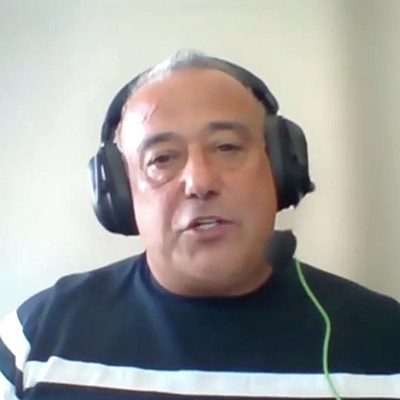
Kaaran Kalantari: Smart contracts were enabled towards the end of last year, and that's when you started to see the ecosystem build out dapps. Since then it has been quite explosive. The growth rate of decentralized applications has been enormous. Cardano is a little slower in development because it's very much research-led, with peer review and the scientific process, to build a robust layer one first. Once that's in place, you get all these great projects coming on and building on it. All of this really only started towards the end of last year.
Ashton: Some say "build fast and break things", while Cardano goes slow and thorough. How do you see that balance?▶ 02:22
Kaaran: Charles, Vitalik, Gavin Wood and a few others started Ethereum, and I got involved in one of the first projects around then. They parted company over disagreements. That's actually positive, because when Charles broke away he took the experience of what's right and wrong on the biggest layer one, where nearly 90-something percent of dapps live, and tried to build something different. Cardano is very much the third-generation blockchain, taking the good lessons from Ethereum, the second generation, and Bitcoin, the first. It's like a hand-built car that lasts forever. It takes time to build great things. It's not about how fast you build it; it's about how useful, scalable, interoperable and sustainable it is.
It's not about how fast you build it; it's about how useful, scalable, interoperable and sustainable it is.
From stealth mode to mainnet
Ashton: How long has your team been working on the DEX, and where is it now?▶ 04:36
Kaaran: The team got together around the end of summer 2020 and started planning what to develop and how. Smart contracts going live was the get-go, but we stayed in stealth mode until the end of last year or the beginning of this one. Our first version was a demonstration of how a DEX can fit into another dapp, a staking wallet. We want to be an infrastructure piece for the whole Cardano ecosystem, because a lot of dapps and wallets will need a swap facility. Then came the platform testnet, and in March the mainnet launch. In three to four months we went from proof of concept to MVP to mainnet, which is very rapid. You might say I'm biased, but the development team is really dedicated, and many of them have been in the Cardano development ecosystem for the last four years.
Ashton: People used to Uniswap expect a simple one-button swap. How does the Wingriders interface compare?▶ 07:02
Kaaran: Uniswap is the granddaddy of all DEXs, and many DEX models, including ours, were initially built on the same architecture and thinking. When you enter the Wingriders app you see a very clean interface where you swap one token for another. It's not much different from using Binance or Kraken, and those are probably a little more complicated, with various layers of swapping. On our DEX you pick your token and the amount, then choose what you want to buy, and that's it.
Order types, native-token swaps and fees
Ashton: Can Wingriders offer more advanced orders, such as decentralized limit orders?▶ 08:10
Kaaran: A lot of people didn't realize you can do limit orders and market orders right on the DEX from the start. The interface looks very simple, but in the settings you can change a few parameters of the swap and be in a limit order, a market order or a flexible limit order. With a market order you press a button and it buys instantly. A flexible limit order has rules, such as not paying more than one percent slippage. A normal limit order works with similar parameters. We're also coming out with something new every week, such as a new integration. There's a chasm between centralized and decentralized exchanges, and many people think these orders don't exist on DEXs. I remember EtherDelta, where you had to hang around for hours before your order went through. Not anymore. You put the order in and it executes in a few minutes, sometimes a little longer depending on network congestion.
Ashton: Can you trade only Cardano native tokens, and what makes Wingriders different?▶ 11:31
Kaaran: One thing that makes us unique among Cardano DEXs at the moment is that you can trade one Cardano native token directly for another. As far as I'm aware that's not possible on any other DEX. Generally you have to swap into ADA first and then go back out into the other token, so you incur fees all along. Direct swaps were one of our first innovations, and there are quite a few other features we believe are unique.
Ashton: How do fees compare with Uniswap and Ethereum?▶ 12:15
Kaaran: There's no comparison. Cardano is a very fee-friendly environment to trade in, and fees are deterministic, so you know up front how much you'll pay. On Ethereum, after DeFi summer when things went crazy, you were paying three or four hundred dollars for a swap. I even heard stories of people paying around three thousand. That's absolutely ridiculous. Things will change, but you don't get that on Cardano.
One thing that makes us unique among Cardano DEXs at the moment is that you can trade one Cardano native token directly for another.
How liquidity providers earn, and DeFi in a downturn
Ashton: How do the liquidity pools and rewards work on Wingriders?▶ 13:24
Kaaran: On a DEX, instead of trading between a buyer and a seller, you trade against a pool. Liquidity providers deposit pairs, for example ADA and USDC or USDT, into a liquidity pool. They're incentivized with a portion of the fees the DEX generates, which goes back into the pool. What's also unique to our DEX is that for any pair containing ADA, we stake that ADA for them, and the staking rewards go back into the pool. So it's a double whammy of rewards. Providers also receive LP tokens, which they can put into our farms. At the moment the farm rewards are our governance tokens. So you're getting a triple reward system, which a DEX needs to operate its swap functionality.
Ashton: DeFi still needs a lot of education. What do you tell people who are scared by the market right now?▶ 15:56
Kaaran: This environment does need a lot of education. I've been actively involved since 2014, and no one was interested until 2017, when my phone wouldn't stop ringing from family and friends. People outside crypto are scared, especially now, with Bitcoin down 50 to 60 percent and everything tumbling. I tell them that if you've seen one cycle, I've seen two, and you know what's going to happen. This is just part of it, and it's a great place to buy. DeFi also gives you an opportunity if you're bag-holding, say you bought ADA at the top at two or three dollars. You can stake it, earn rewards and accumulate. I'm 100 percent sure this market will change. It has happened many times, and we will get back to a bull market, whether that's in six months, a year or two years.
This interview has been edited for length and clarity. Recorded June 2022.