Key takeaways
- Fogo is a Layer 1 built on the Solana Virtual Machine designed specifically for high-frequency trading with institutional-grade infrastructure.
- The project uses multilocal consensus to enable collocation of validators in data centers while maintaining ability to fall back to global consensus if needed.
- Traditional blockchains lack trading-specific features like latency guarantees and protection against transaction ordering manipulation that institutions require.
- Fogo implements social and technical layer rules to prevent validator abuse around transaction prioritization and includes a curated validator set that can remove bad actors.
- Doug Colkitt brings high-frequency trading expertise from Citadel and DeFi experience from building Ambient AMM to address limitations of general-purpose blockchains for trading.
Why trading needs its own chain
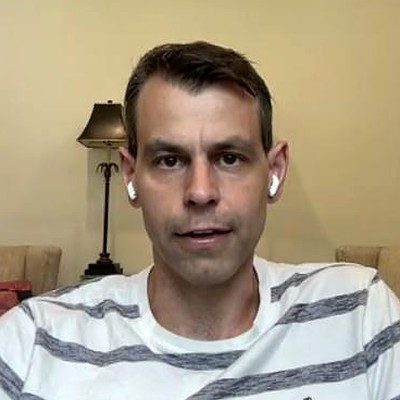
Ashton Addison: How did you go from high-frequency trading to co-founding Fogo?▶ 00:24
Doug Colkitt: I spent most of my career as a high-frequency trading quant in traditional finance. I started at Citadel when they were spinning up their early HFT group, then worked on a number of smaller teams trading equities and futures around the world. I got into crypto during DeFi summer and was an MEV searcher for a while. Then I started my first project, Ambient, an EVM-based AMM. We saw limitations in that model, in general-purpose blockchains, and in AMMs being limited to certain types of markets. I met my Fogo co-founder Rob almost a year ago. He had a vision for an L1 built for trading, with the minimum you'd need to compete with TradFi or centralized exchanges, but as decentralized as possible. The biggest thing was SVM instead of EVM, and it was clear a lot of activity was moving to Solana. So I joined and co-founded it with Rob.
Ashton: Why does trading need a dedicated layer 1?▶ 02:24
Doug: Blockchains, going all the way back to Bitcoin, weren't built for the conditions you face in trading. Bitcoin's traditional use is transfers, and those aren't very time-sensitive or order-sensitive. If you delay mine a few seconds, it's not the end of the world. Trading is harder. We're trading value from different assets against each other, and those values fluctuate all the time. That's why high-frequency trading firms exist and make billions of dollars a year. But by and large, the blockchains we have today don't move fast enough or give the guarantees you need. So there are a ton of games, and a ton of value gets extracted. Institutions, and even ordinary traders, don't want to deal with sandwich attacks or bundling.
Ethereum is a great network for keeping assets or holding assets. Solana is a great network for moving assets.
Colocation and policing validators
Ashton: What pieces did you put together to make a layer 1 efficient for high-frequency trading?▶ 04:04
Doug: The big one is latency. Even with the best software in the world, there's a limit to how fast the speed of light goes. Colocation is also predictable. If I'm an institution, I want to know how long it will take for my trade to hit the market. So we built Fogo to be colocated, using what we call multilocal consensus. Instead of moving messages between far-apart validators, we bring them together in one place. That performs well but comes with centralization risk. So multilocal consensus makes it easy to move from one colocation center to another, or even fall back to fully global consensus. That's slower, but it's a good failsafe. If a data center goes down, the whole blockchain doesn't go down. The other issue is abusive behavior in block production. In traditional markets most things are first in, first out. In a blockchain, the leader has total freedom to order transactions however he wants, or to leave some out. That makes the level of trading institutions require not possible. So we've put rules at both the social and technical layers on what validators can and can't do, particularly around prioritizing some transactions over others. We also have a curated validator set. If a validator behaves abusively, the majority of the stake can kick them out. People are very clever when there's money on the line, so we have that social consensus as a fallback.
Ashton: Is localizing validators copying the TradFi idea of putting servers closer to the exchange?▶ 07:50
Doug: Exactly. When TradFi went electronic, exchanges often didn't have colocation at first, so people went around town looking for the fastest connection. Then exchanges built their own data centers. Next, people worked out which rack in the data center was closer. So exchanges gave everyone a cable of exactly the same length to make things equal. With distributed validators you'd see the same thing, except the infrastructure costs are far higher. Solana's validators are spread across probably 100 different data centers, and being near all of them would cost a huge amount. So we jumped straight to what we know the end state is. A trading firm can look at that and say, this is something I'm used to, I know exactly how long it takes to get my orders in. They're more comfortable, so they're willing to show a lot more liquidity and trade a lot more.
Speed, Firedancer and the road to mainnet
Ashton: Why build a full layer 1 rather than another DEX on Solana?▶ 09:48
Doug: One core issue with the EVM, especially Ethereum's layer 1, is that block times are very long. We were early, strong advocates of lowering them. Even in an AMM context, our research shows that the longer the block time, the more power the block builder has and the more they extract from the system. Shorter block times mean better market quality. Solana took off partly because its block times were shorter. Solana AMM returns are, if not positive, a lot less negative, and often positive depending on the coin. Solana block times are 400 milliseconds. Right now in testnet we're running 40 milliseconds, and I hope by mainnet, or shortly after, they'll be even shorter. Being this close to the L1 also lets us do integrations around how transactions are prioritized. General-purpose blockchains aren't transaction-aware. Market makers put out quotes and need to adjust them as the price moves at Binance. If the blockchain isn't aware, people can pay a higher priority fee to hit stale liquidity, and the market maker takes a loss. Ultimately, end users see less liquidity, or more expensive liquidity.
Ashton: What's the timeline, and how long does a platform like this take to develop?▶ 14:05
Doug: We're using existing components where we can, leaning very heavily on Firedancer. We decided early to run a single client, the fastest Solana client. Right now that's technically Frankendancer, and it will be full Firedancer when that's ready. We've seen throughput and latency improvements over the standard Solana client. We've still had to make modifications. It's not as simple as forking, because we need higher reliability, higher throughput and much lower latency. No one has really tested the Solana software at these levels, so we're finding a lot of things out. Our infrastructure-builder testnet has been up since March 1st. Our public testnet with some apps deployed will be out in July, and we're pretty firmly targeting mainnet by the end of Q3.
Ashton: What is Firedancer, and why run only that client?▶ 15:36
Doug: A blockchain is a protocol, a set of rules, and nodes run software to participate in it. Ethereum has about five different clients you can choose from. Solana has traditionally had one, now called Agave. Firedancer is a project funded by the Solana Foundation to rewrite the core Solana client from the ground up to be much faster. It's being developed by Jump Crypto, a huge trading firm in Chicago that is used to writing low-latency code. When you have multiple clients on one network, you can only go as fast as your slowest client, because if one side can't keep up, the network becomes unstable. So we thought early on it made sense to run Firedancer 100% from the start, without supporting slower clients. That lets the network move faster. It's one of the interesting things you can do when you start a network from scratch.
Solana block times are 400 milliseconds. Right now in testnet we're running 40 milliseconds.
Institutions, liquidity and stablecoins
Ashton: How does Fogo relate to SOL, and what will bring institutions to SVM chains?▶ 17:21
Doug: Fogo uses the Solana technology stack, but it's not an L2. It's its own L1, and the Fogo token is the gas token and core token of the network, the same way SOL is for Solana. We'll also do some interesting things with the DEX, including using the Fogo token as collateral. We should have Wormhole support on day one, and since a lot of liquidity is connected to Solana, we anticipate a lot of it on Fogo. On institutions, the biggest barrier I've seen is that banks move slow. Getting anything through compliance often takes six layers of bureaucracy and years. Four or five years ago EVM was the default, so banks have mostly built for that. But institutions want to be where the end users are, so they are building out for SVM. I think we'll start seeing institutions come online in SVM-based worlds pretty soon. Fogo is well positioned because we can police abusive practices that financial institutions aren't comfortable with on fully open networks like Solana.
Ashton: How much DeFi TVL do you expect to move from Ethereum to Solana and Fogo?▶ 20:02
Doug: Ethereum is a great network for keeping assets or holding assets. Solana is a great network for moving assets. Ethereum has a ton of TVL because a lot of capital is used to parking it there. The applications that succeed there, like restaking and maybe some lending, don't have to move around quickly. Ethereum is not a great trading network. Some L2s have made progress, but Solana is far ahead. Solana's TVL is comparatively lower because people don't move there to park assets. They move there to trade. Blockchains generate revenue when people take action. Assets sitting idle make a nice TVL number, but they don't drive much value to the token. Fogo is the same. We're general purpose and open, and we might have some of those other applications, but we're really focused on trading. So our North Star isn't TVL. It's volume and revenue to DEXs, the things that indicate trading and activity.
Ashton: What role will stablecoins play on Fogo, and how will regulation affect institutional adoption?▶ 22:29
Doug: We're finalizing our stablecoin strategy and talking to a couple of providers. Users can expect a canonical stablecoin on day one. People can bridge over whatever they want, but the DEX will support a single stablecoin as collateral, and the ecosystem will coalesce around it. A clear stablecoin inside the ecosystem is super important for institutions. They're dollar-denominated firms trying to earn profits in dollars, and they don't want to hold their whole balance sheet in a newer, longer-tail L1 token. It's still shocking how many firms that do very well in crypto, like big market makers at Binance and Bybit, don't touch anything on-chain. It's not worth risking their larger business over regulatory issues. Once we get clarity, especially around stablecoins, I think it's inevitable that they start looking on-chain.
This interview has been edited for length and clarity. Recorded July 2025.