Key takeaways
- Dogecoin is the second-largest proof-of-work blockchain in the world, merged-mined with Litecoin, offering faster and cheaper transactions than Bitcoin.
- DogeOS aims to create an on-chain economy and ecosystem of Dogecoin-native apps to serve the underserved community of millions of DOGE holders.
- The Dogecoin wallet became the most-used Dogecoin app by prioritizing user experience and community support over technical perfection.
- Dogecoin's decentralized governance with no central team or foundation has historically limited ecosystem development compared to blockchains with organized foundations.
- Jordan Jefferson transitioned from skepticism about Dogecoin to deep commitment after experiencing the community's exceptional support during the wallet's early development.
From Dogecoin skeptic to wallet builder
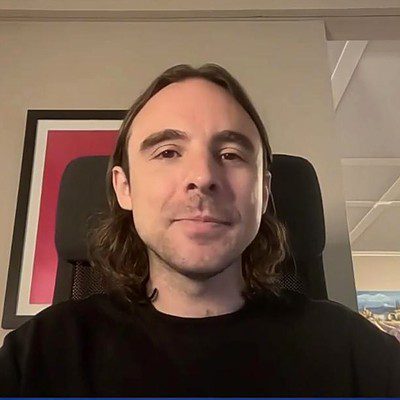
Ashton Addison: How did you come to Dogecoin, and what led you to co-found DogeOS?▶ 00:49
Jordan Jefferson: I was early into Bitcoin, an OG, if you will, and a true believer in peer-to-peer electronic cash. When Dogecoin launched, I didn't take it seriously. I didn't get the joke. I thought it was funny but would never have any value. I didn't understand the value of memes, culture and community. I already used Litecoin at the time and thought Dogecoin was similar, so I faded it early. I had a roommate who was mining it non-stop and kept telling me to just do it for fun. I brushed him off. It wasn't until we started MyDoge, the Dogecoin wallet and our first product, that I fully dove into the community. I credit my partners for dogepilling me. I wouldn't say I'm a maxi of anything, but I'm as much of a Doge maxi as you could be once I got a taste of that community.
Ashton: How did the wallet lead to DogeOS?▶ 02:33
Jordan: The Doge community is huge, with millions of holders, if not 10 million-plus, and it was and still is underserved. There wasn't a Doge-specific wallet, apart from an old one that had been abandoned. So my CTO Alex and I dropped everything, spent a few months coding and launched the first version on the App Store. The community's response was unlike anything I'd seen. In the early beta, if users thought their money was stuck, they didn't get angry and call us scammers. They asked how they could help. We never lost anyone's money. The wallet quickly became the number one Dogecoin app on the App Store, and it still is. DogeOS comes from the same thesis. We always wanted to enable developer capabilities and an economy on Dogecoin. The idea is to create an onchain economy that uses Dogecoin, build an ecosystem of Doge-native apps and experiences, and give the community more to do with their Doge.
I don't think the world needs another blockchain, and definitely not one that's just a copy and paste of all the other apps.
Why Dogecoin has lacked apps until now
Ashton: Why is Dogecoin a good blockchain to build on?▶ 05:14
Jordan: Most people don't even know Dogecoin is a blockchain. They know it's a memecoin and assume it's an ERC-20. Half the people I meet across the industry, including CEOs of billion-dollar companies, don't realize it. It is the second largest proof-of-work blockchain in the world. It is merge-mined with Litecoin, so together they form the largest proof-of-work network. I think that has a ton of value the world hasn't realized yet. As for why it works on its own, it is fast and cheap. That is the fundamental premise. It has the same security assumptions as a proof-of-work network, but it is slightly faster, cheaper and objectively more fun.
Ashton: Why did it take over a decade for an app layer to arrive?▶ 07:16
Jordan: Here's my hot take. Dogecoin is completely decentralized, including in governance and control. Nobody is in charge. There's no foundation with a huge treasury, as there would be if a company or team had launched it. It's mostly volunteers contributing. If Dogecoin had had a huge developer team back then, and natively integrated smart contracts, I don't think Solana would be what it is today. It had the memecoin narrative and the fast-and-cheap narrative. With the development capabilities of something like Solana, it would have been the Solana of today. That decentralization is also the best thing about Dogecoin, so don't get me wrong. And it's not as if there has been no innovation. Inscriptions on Doge, DRC-20s and Dunes, the Doge versions of Ordinals, BRC-20s and Runes, brought a ton of developers into the space in the last year or two. Limited L1 capabilities may even push people to innovate more. What we're doing is a natural evolution: a truly Doge-native execution layer, built with world-class tech and partners, that removes the barriers for developers.
What gets built on DogeOS
Ashton: What kinds of applications can be built on DogeOS?▶ 10:42
Jordan: Anything you could build on Ethereum, Solana or another chain could be built on DogeOS. In its first iteration it is a fully EVM-equivalent execution layer. But I don't think the world needs another blockchain, and definitely not one that's just a copy and paste of all the other apps. Developers are excited, so we have to guide them to ask what they can do differently and what will appeal to the Doge community. The capabilities are endless now, and with such a wide opportunity you may not feel as pressured to innovate. So we tell people to innovate. What we need is a unique economy and a unique ecosystem that serves the Doge community.
Ashton: How will DogeOS get Dogecoin moving, rather than sitting on exchanges?▶ 13:15
Jordan: That is the goal: to put Dogecoin to work. Around 90% of Dogecoin sits on centralized exchanges. The Doge community sees Dogecoin as money. Bitcoin has shifted to a digital gold narrative, and Dogecoin is carrying the torch of money. We want the world to accept it as the currency of Earth. But if we can't get it used as money within the crypto economy, how will someone on the street who has never used crypto use it? It's not meant to be only an investment. Bringing it onchain is the first step, and then you give people something to do with it. Even the simplest case, earning yield on your Doge savings, would be transformational. Dogecoin has a small, very reasonable inflation, much better than any fiat currency. Imagine earning yield that outpaces it.
Ashton: Is the DogeOS team building the apps itself?▶ 16:06
Jordan: We are onboarding developers and providing the tools, infrastructure and support to build amazing things. We also have ideas we've dreamed up since before we built the wallet, so we're building for ourselves too. But in the beginning it's important that this isn't an ecosystem where we've built everything and own it all like some big company. That defeats the purpose, given that what we love about Dogecoin is that it's decentralized and no one is in charge. That's the vision for Doge too. There's a roadmap to where maybe I have no power, no one else is involved and it's all in the hands of the people.
It's not meant to be only an investment. It's meant to be money.
Roadmap and the five-year vision
Ashton: Where is DogeOS now, and how can people get involved?▶ 17:09
Jordan: We have a developer testnet right now, and we'll roll it out into a proper public testnet very soon. I don't want to throw out a hard date, but we're looking at the full rollout and mainnet launch around the end of summer or beginning of fall. Developers can get involved right away. Reach out to us, as we have a builder chat and people on the team supporting those efforts, and a big developer resources website should launch any day now. For Dogecoin holders who aren't devs, we're very close to rolling out a campaign to bring them onto the testnet. They can have fun and help the developers, and we'll have some competitions and games.
Ashton: What is your vision for Dogecoin over the next five years?▶ 18:34
Jordan: The most powerful thing Dogecoin has going for it is its longevity and the size of its community. The number of holders is far bigger than any other memecoin and many other coins. It's basically the Bitcoin of memes, and it's hard to imagine a newer, smaller thing getting to that global scale in a similar time. Even a year ago, far fewer people took Dogecoin seriously. Now institutions are buying it that wouldn't have bought Bitcoin one or two years ago. The challenge is to re-activate everyone. If we get them excited and show them this mission is still going, that we're on the verge of building a new financial system by the people for the people, then anything is possible. I generally avoid speculating on price, because it's about the dream and the price will follow. In five years I expect Dogecoin payments to be commonly accepted at retailers across America and around the world, and I think much sooner than that. I also expect more of the crypto community to realize Dogecoin is a blockchain. There will be a real ecosystem and a real onchain economy on Doge. Doge will spend less time on exchanges and more time moving around the ecosystem, actually being spent and used as money.
This interview has been edited for length and clarity. Recorded June 2025.