Key takeaways
- Mantis has built a vertically integrated DeFi stack including IBC-based bridging, a solver network for best execution, and the DICE framework powering AI agents.
- The platform currently supports MEV-resistant trades up to $75,000 across Ethereum and Solana with over $50 million in volume crossed.
- Mantis aims to add an agentic layer enabling personalized AI agents to execute swaps and find alpha while protecting against front-running by competing AI bots.
- Few platforms currently integrate AI agents with actual trading capabilities; most focus on social interactions like Twitter and Telegram.
- The vertically integrated approach allows Mantis to internalize order flow and reduce costs compared to protocols charging percentage-based fees for swaps.
A ChatGPT moment for crypto
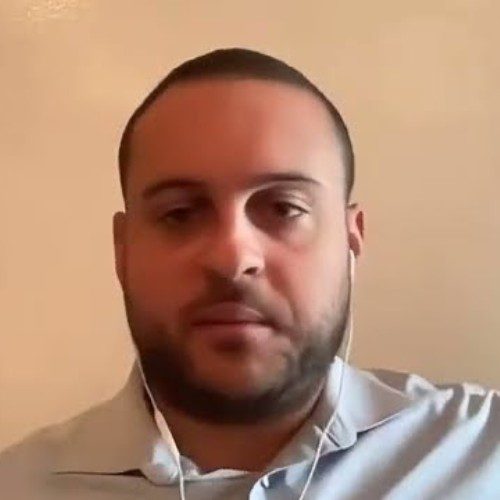
Ashton Addison: What have you and your team been building at Mantis?▶ 00:22
Omar Zaki: We've always believed in a ChatGPT moment, a ChatGPT experience, for crypto. But to have a moat, you need a vertically integrated stack. Since starting in 2021, we've built the base-layer infrastructure, which is IBC-based bridging between Ethereum, Solana and the Cosmos ecosystem. Then we built the solver network, a layer on top that allows best execution for swaps and other DeFi activity across Ethereum and Solana, and within a single chain on each. Now we have the DICE framework, the main component powering our network of personalized agents. Agents from other ecosystems, like Virtuals, can also tap into it to do DeFi activities.
Ashton: What has to happen before AI agents can be trusted to trade and use DeFi for us?▶ 01:57
Omar: First, you have to make sure the agents are actually doing what they're supposed to be doing. Second, it needs to be scalable, so the cost doesn't jump just because the user experience is better. I feel we've solved the second problem. Because we're vertically integrated, we can internalize a lot of the order flow and make the process cheaper than other protocols that charge you 1% to do a swap. On the first problem, there are protocols like Hyperbolic, and we're also working on a Watchers Network, a verification layer for agents.
We offer the ability for agents to do MEV-resistant trades. That matters, because how would an agent know any different?
Agents that trade, and vaults that follow
Ashton: Are many platforms actually testing AI agents with trading?▶ 03:30
Omar: Almanac isn't out yet, but is theoretically going to offer something similar. We have an agent already trading, called Lady Mantis. She runs a poll, the community votes on what she should buy, and she buys it. Griffain is also doing personalized agents. Beyond that, there's not much out there. Most agents are focused on launching something that handles Twitter and Telegram interactions, and none of those are trading. That's what we want to enable. We start with a personalized layer where people manage their finances, then extend it to Web2 integrations like Shopify and Amazon. And why can't AIXBT launch a vault strategy that people just put money into? I'd want to give it a shot with some of my money. That convergence, where any vault strategy can be live and tokenized by agents that have alpha, is the crux of what we want to focus on. We want to become a central platform for agents competing to create the best alpha onchain.
Ashton: What can people do with the Mantis app today, and what comes next?▶ 06:19
Omar: You can use the live solver network to trade on Ethereum, on Solana and cross-chain. You can copy trade your friends, and you can do swaps as big as $75,000. Several solvers are actively solving, and we've crossed $50 million in volume. Next, we're putting the agentic layer on top, so you can use the DICE LLM directly in the Mantis app with your own personalized agent to do swaps and find alpha. The existing application is the manual way of doing things onchain, and it looks a lot like Jupiter. The difference is that we have a solver network, so you're not getting front-run. If you want a tagline, we offer the ability for agents to do MEV-resistant trades. That matters, because how would an agent know any different?
Fees, chains and the rollup
Ashton: Why does a vertically integrated stack matter for traders?▶ 08:52
Omar: Look at Standard Oil. It owned everything, from selling the oil to the tires and the trucks transporting it. In crypto that isn't really a thing, because you're supposed to have a collaborative, money-Lego setup. But over time people are realizing we run into the same economies of scale as anywhere else. If I use a bridge, there's a bridge fee. If I use a DEX, there's a DEX fee. An agent doing a swap pays 1% to Griffain, the DEX fee, and more for being routed through Orca, so you end up with trades costing two or three percent. Do 50 of those and your money is eventually gone. We charge a flat 0.1% for trades, there's no front-running, and we get you better quotes than Jupiter. We also have our own bridges powering the solver network. Bridging from Ethereum to Solana is that flat 0.1%, you're filled instantly, and an IBC message is then sent from one chain to the next. Everything fits together, and we can lower the cost of doing business for users dramatically compared with our competitors.
Ashton: Why focus on Ethereum and Solana, and what about other chains?▶ 11:19
Omar: Most people with major treasuries hold them on Ethereum, along with much of the stablecoin supply, USDC included. If most of my net worth is on Ethereum because I trust it, I can quickly go do things on Solana and have a way back to my bank. Ethereum is a long-term bank for your long-term holdings, and Solana is essentially your brokerage. Base and Arbitrum are also casinos, and those L2s are becoming interesting to us. We'll probably add them, and Abstract might be a nice place for degening too. But our bread and butter is the belief that it's important to have your money on Ethereum as your bank. That's also a very institutionally oriented class of users.
Ashton: What does the Mantis rollup do?▶ 13:25
Omar: The Mantis solver network is essentially a dark pool. The rollup takes users' intents and gossips them to solvers, and the solvers can then fill your order directly. As a user, you never actually interact with the rollup. You just know it's there processing your trades. Long term, it could look something like Jupiter's recently announced JupNet, an omnichain overlay network, and maybe we'll pursue that in the future. For now it's an anonymization and dark-pool processing layer.
Ethereum is a long-term bank for your long-term holdings, and Solana is essentially your brokerage.
Token, beta access and what's next
Ashton: Is there a Mantis token, and what would it do?▶ 18:57
Omar: We're focused on getting as much usage of the platform as physically possible, and the token is a good way to build an ecosystem around these agents and get people interested in a long-term stake and in decentralization of the network. Anything here needs to be enabled via governance, but as the core team we're working on proposals around revenue sharing. In most protocols you give all your trading revenue to the likes of Jupiter and Orca along the way. In our case, we can internalize the swap revenue and pass it to the token. It could also be used instead of holding ten different tokens for gas and API requests. In the early days, staking a minimum amount of the token gives access to the private beta. As things become more public, we can look at fee discounts and first-come, first-served strategies. The token will have a significantly different life once we're tokenizing vaults.
Ashton: What's on the roadmap, and when?▶ 22:17
Omar: We're adding as many people as we can to the private beta right now, with token release and staking for access alongside it. We're targeting a public launch in a couple of weeks, then the mobile application, and then introducing vaults. We'll roll the vault framework out in phases, because we're worried about agents rug-pulling vaults. We want to monitor it closely and test it properly. We'll probably have a private version to share sometime in February with people who used the private beta before.
This interview has been edited for length and clarity. Recorded January 2025.