Key takeaways
- One in three people aged 37-45 in the United States are being targeted by crypto scams, with tactics becoming increasingly sophisticated since 2021.
- LinkedIn-based scams are currently the most prevalent threat due to the platform's transparency, allowing scammers to impersonate professionals and target users with detailed personal information.
- Scammers employ extended grooming periods on social media, building false relationships over weeks or months to establish trust before executing their schemes.
- Unsolicited offers on social media should be ignored or blocked immediately, as legitimate professional opportunities are rarely presented this way.
- Lionsgate Network uses advanced forensic tools to trace blockchain transactions and support scam victims while collaborating with law enforcement globally.
Why scams keep getting smarter
Ashton Addison: What is Lionsgate's mission?▶ 01:10
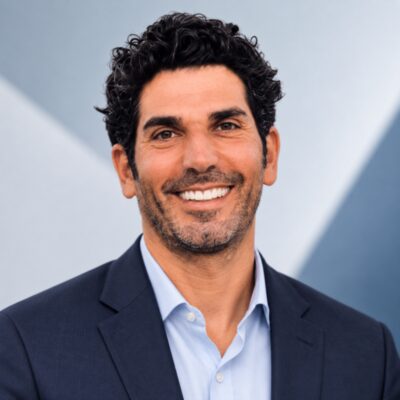
Bezalel Raviv: The first mission is to raise awareness in the space as much as possible. When you know the trick, you don't have to clap for the magician on stage, but you need to be a magician to know the trick. Many people in the space are not aware, and the more unaware they are, the more likely they are to be targeted. We see one in three people being targeted in the United States, between the ages of 37 and 45. Those are crazy numbers. Corporates in the space are trying to offer solutions, but organized crime is becoming more evolved and much more agile. We have had information about the market and threats since 2021, and in that time they have gone from kindergarten to an academic diploma. Prevention tools and services have to scale the same way. If they don't, that's an open door for someone to hack and steal your crypto.
Ashton: Has the industry really cleaned up, or are there more scams than before?▶ 03:42
Bezalel: It's not getting cleaned up, let's be honest. If it were, we'd see different numbers. Do we see more? Yes, a lot more, but we are so involved in the space that we also attract it. It's like asking a police officer if they see more crime. The tactics are far more intuitive, so more educated, wealthy people react, because the narrative of the threat is directed at them. We see a different trend almost every three months, and currently it's LinkedIn-based scams. LinkedIn is the most transparent of the social platforms. You share where you're from, where you worked, who your boss was, who your colleagues are, and you use your own photo. That's organized crime on a silver platter. You don't need to go through any KYC to register as an employee at Microsoft and then target the people at Microsoft. We've had a lot of reports in the past three months from scams that started on LinkedIn.
It's not getting cleaned up, let's be honest. If it were, we'd see different numbers.
The LinkedIn playbook
Ashton: What should people watch for on LinkedIn?▶ 07:22
Bezalel: The only best way, and this is quite racy, is to close your account. Where will you be targeted? On social media platforms. But maybe that's too dramatic, because you still want to interact with your colleagues. If you keep your account, then when anyone offers you anything unsolicited, your answer should be no, ignore or block. We were taught that it's safe online. In 2025 we forgot what our grandmother used to tell us: never speak with a stranger. These offers can look very compelling, and the grooming period is far longer now. Someone likes your post for weeks or months and gives you the sensation that they're a real person. In your mind, you kind of know them. You don't. So say no to unsolicited offers from people you have never physically met. In many ways we have to go back to web zero.
Ashton: How does that grooming end in someone losing their crypto?▶ 11:50
Bezalel: It's never that obvious, because they target educated, smart people who worked very hard for a degree and a corporate job. They might offer you a trading platform that promises a nice boost to your finances given rising inflation. It makes a lot of sense, and they press all the buttons. They know what to say, and it eventually ends up with crypto. Crypto is the mechanism for withdrawing money from people where they know law enforcement will be quite passive about it.
What recovery really looks like
Ashton: What happens when victims take their case to the police?▶ 13:31
Bezalel: If you report it, and your case is less than $10 million, police are unlikely to onboard it. That's where we come in. Our technology gives you almost instantly a forensic analysis report so comprehensive that it's evidence to serve to law enforcement, so they can act with a warrant or subpoena. We do the complex backend work that law enforcement won't do unless a case is really big. We also get on a call with a detective to explain what we've traced and what the next step is. We can never commit to a recovery, because law enforcement, the middleman, has to close the case. But with our forensic analysis, the chances of completing the recovery journey are far higher than going about it through any other agency.
Ashton: Should that $10 million threshold be lowered?▶ 16:25
Bezalel: I agree with you. It's cutthroat to decide which cases to take. We check a case before we onboard it, to see whether there is enough for law enforcement. If the preliminary analysis isn't solid enough, we let the case go, with no commitment, financial or otherwise. The client still gets data, insights and transparency. We say we are the MRI engineers and law enforcement are the surgeons. We help with the MRI, and law enforcement offers the operation. No surgeon in the world will put you under anesthesia without the MRI.
Ashton: Is there a minimum loss you take on, and can smaller amounts be recovered quickly?▶ 31:13
Bezalel: One thing we verify before onboarding is how much you lost, your net loss. We think about it from law enforcement's perspective: are they likely to onboard it in Kentucky, or in New York? We understand their playbook at state, local and federal level. If I know the analysis won't work for you and law enforcement will ignore the case, I'll dismiss it. We check 24 verticals on the backend before we onboard a case, not only whether we've traced your funds to a wallet. If we can't take the case, we offer a premium analysis and the prevention kit, which we launched six months ago. It's been extremely successful, because once you've been targeted successfully, you're most likely to be targeted again, sometimes for years, across WhatsApp, Telegram, TikTok and LinkedIn.
Ashton: Can you share a recent example of a scam you've seen?▶ 38:04
Bezalel: A few days ago we received information that a client in the US got a letter at his home address from Ledger. It said the wallet hadn't been updated for a while, there was a security risk, and here was a QR code to connect. We know the Ledger database was hacked, which means these scammers have people's names, addresses and balances, so it can look like a sincere call to action. The good thing is that, because it's blockchain, we can trace the funds to exactly where they are, even if they're stashed in Uniswap, in less than nine seconds. That's enough for us to build a case. We do it using ML and AI, because the scammer worked very hard to disguise the transaction route.
We say we are the MRI engineers and law enforcement are the surgeons.
AI, regulation and the trust problem
Ashton: Will AI be more prominent in scams the next time we talk?▶ 21:05
Bezalel: I think AI is going to offer a solution for navigating the threats we experience. It's the right technology arriving at the right time. We can no longer rely on human capacity alone. We want to build things that free people from tedious work. It will allow you to go to the beach, develop a dream from your childhood that you abandoned, and travel the world. I think the instrument that will get us through the pain we feel in the world right now, the scarcity of good service, is AI.
Ashton: Will governments get deeper into fighting crypto scams?▶ 27:04
Bezalel: The more administrations around the world invest in crypto, the more they realize that without human trust it isn't getting anywhere. If everyone pulled their crypto back into fiat, the market would collapse. Trust is the superpower in any token evaluation and any company evaluation. You can be as pro-crypto as you want at administration level, but the ones actually putting money into memecoins or Bitcoin are the public. If you don't combat threats in the space, people won't be as friendly about it anymore. Would you go out at 1 a.m. to a place where they snatch the watch from your wrist? Probably not.
This interview has been edited for length and clarity. Recorded May 2025.