Key takeaways
- METL is a hybrid decentralized fiat gateway combining regulated fintech banking integration with blockchain technology to reduce onramp costs compared to card-based solutions.
- The platform uses a receipt token called USDR backed by USD that bridges fiat into DeFi within seconds after ACH settlement, without holding user wallets or balances.
- METL received money transmission exemptions from every state except New York by positioning users as issuers, bypassing traditional funds flow and issuance regulatory frameworks.
- The SDK will allow developers to build custom gateways using templates and microservices without requiring approval or integration processes from METL.
- The platform is currently in beta on Avalanche with users able to onboard, pass KYC, transfer funds, and exchange tokens on TraderJoe.
A decentralized gateway from bank to wallet
Ashton Addison: What is METL, and how does it work?▶ 00:50
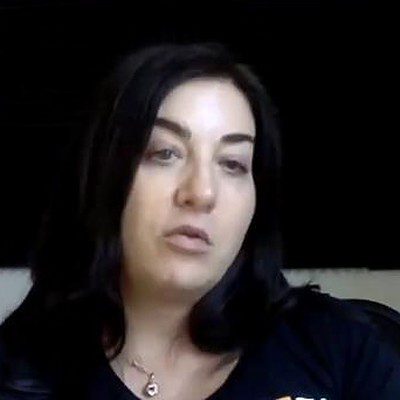
Anna Vladi: METL is a decentralized fiat gateway, and we believe we're the first of its kind. It's a hybrid. There's a fintech piece, where we deal with banks that hold the USD in custody, and a blockchain piece, which is the part we're decentralizing. We're in beta, so the team controls it for now. The plan is to put it on nodes with multi-party computation around it, so it's secured by node validators. We work directly with banks and we don't use cards. It's an ACH integration. Once the ACH settles, the user gets a USDR receipt token, which is backed by US dollars. It's not a stablecoin per se. It has a very short lifespan and just bridges the funds from USD into DeFi. We also don't manage any wallets, so we don't hold any user balances on a balance sheet. Users register with the wallet of their choice, and that's where the USDR lives. We're also building an SDK so that any developer can build their own gateway and plug it into the platform they want, instead of going through a due diligence and approval process.
Ashton: How far along is the product? Can everyday users connect a bank and start buying?▶ 09:44
Anna: You can onboard through our website. The onboarding is web 2 level, so anybody will understand what it looks like. We're building a web 3 onboarding for crypto-native people, and that will replace it. We're in beta. You can onboard, pass KYC, transfer your funds, mint the token and exchange it. Right now we're on Trader Joe on Avalanche. This is to test the flow, not to go in and invest. We're still building a lot of pieces, so don't send ten thousand dollars. Just play with it and see that it works.
We don't want to launch a token for the sake of launching a token.
Why cards cost more, and where regulation fits
Ashton: Why would a newcomer choose a decentralized onramp over a card-based service?▶ 04:38
Anna: The main benefit is cost. Card-based ramps are quite expensive. You may use one a couple of times, but when you see six percent every time you transact, you realize that's a lot. It's like traveling in Europe with a Visa or Mastercard and being charged an international transaction fee. Eventually you get a card that covers it. Cards are convenient, and there's no KYC, so initially a user may think it's great. A couple of transactions later they find it quite expensive and unsustainable. That's where we come in. The user does have to be a little more sophisticated, though. This isn't for complete newcomers.
Ashton: Fiat onramps have existed for years, but a decentralized one hasn't taken off. Why?▶ 07:27
Anna: We've received money transmission exemptions from every state except New York. What's interesting about our legal framework is that the user is the issuer. By bypassing the funds flow and the issuance piece, we're just the technology that connects. Every state had never heard that format before, so it took a little time to explain. The other part is decentralization. Once the ACH settles and we mint the ERC-20, the USDR receipt token, we put it on MPC, multi-party computation. It's basically like a Gnosis Safe, where multiple people confirm a transaction. Because it's decentralized, no entity is in the flow of funds, whether USD or ERC-20. In the first case it's touched only by the bank or the user, and in the second by the node validators, of which you can have an infinite number. That's how we solved quite a few regulatory issues as well as the decentralization issue.
Ashton: Will there be minimum or maximum purchase amounts?▶ 10:54
Anna: The minimums and maximums are controlled by US regulation, and because we have a banking partner and a banking API, there's no limit on our side. There are limits with cards, and that's why the transaction fees are so high. Anyone dealing in cards is considered a high-risk merchant. With us it's a completely different scenario. Avalanche doesn't have limits either. It's just a matter of how much liquidity is out there to swap the tokens, and of the pools being built. There's still a lot of work to support all the different tokens and combinations.
Chains, tokens and validators
Ashton: Will Bitcoin be supported?▶ 06:12
Anna: Not at the moment. Right now the roadmap is for EVM-compatible chains. Possibly in the future. We have a lot of other problems to solve first, so maybe next year.
Ashton: Will there be a METL token, and what would it do?▶ 12:56
Anna: The METL token isn't live yet. It will come once all the pieces are built. We don't want to launch a token for the sake of launching a token. It has to have a purpose. The main purpose will be for node validators to stake it, and we're looking at liquid staking as well. An economy has to be self-sufficient and self-sustainable. Until all the pieces are built, the token won't be used, so it doesn't make sense to rush it.
Ashton: Running a node takes real technical expertise. Will existing node operators and stakers be drawn to METL's ecosystem?▶ 14:08
Anna: We're already in conversations with a few of them who are supporting our launch ecosystem. That's our go-to first. They're the experts. They've already done this with Avalanche and done it well, and we want to work with established, mature projects.
We also don't manage any wallets, so we don't hold any user balances on a balance sheet.
Staking as monetary policy
Ashton: What do you make of staking and the shift in monetary policy that blockchains represent?▶ 15:25
Anna: Especially with staking on all the different chains and ecosystems, you have monetary policy, funds running through and a whole economy being built. For governments and sovereign entities, what makes them powerful is money and monetary policy. Now that is shifting in a different direction, autonomously. Staking is essentially like bonds. Why do you trust US government bonds? Because of taxation, since taxes are inevitable. It's similar on Ethereum. If you're staking, you know you'll get a dividend, because fees will be switched from miners to you. There's an assurance very similar to a US bond.
This interview has been edited for length and clarity. Recorded July 2022.