Key takeaways
- Internet Computer differs from other blockchains by running complete applications on-chain including code, data, and logic, not just maintaining token ledgers.
- ICP uses a subnet architecture where independent nodes globally operate advanced machines that can horizontally scale infinitely while remaining interconnected.
- Developers can write smart contracts called canisters using WebAssembly-compatible languages including Rust, Motoko, TypeScript, and Python.
- Dfinity ecosystem includes decentralized applications for social networking, identity management, search, video, and no-code platforms built on Internet Computer.
- The protocol aims to enable end-to-end software applications like games, metaverses, and social networks to operate completely decentralized on blockchain infrastructure.
A blockchain that runs the whole app
Ashton Addison: What is Dfinity working on, and what sets it apart from other layer-one blockchains?▶ 00:44
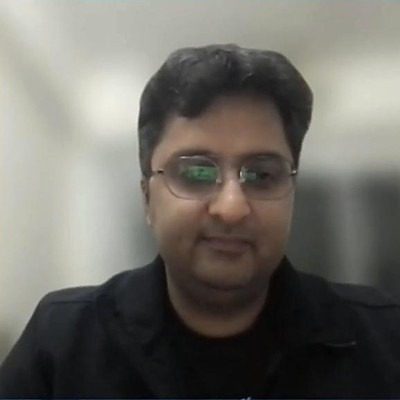
Lomesh Dutta: The foundation helps our main contributor build the Internet Computer Protocol, or ICP. Most blockchains are essentially ledgers that record who owns which tokens, with very limited metadata, and they try to scale by fitting more transactions into a block. We started with the question: can a blockchain be used to run general-purpose software completely on chain? That could be a game, a metaverse, a social network or an enterprise application, with all the data, assets and application logic on the blockchain. The nodes are operated by independent parties in dedicated data centers around the world, which gives us very high throughput. We organize them into subnets, and any subnet can talk to any other as if they were one network. So you can scale horizontally just by adding nodes.
Ashton: How easy is it for developers to build on Dfinity, whether they come from Web2 or from other blockchains?▶ 06:58
Lomesh: Each subnet hosts what we call canisters, which are our smart contracts. You can host both your code and your data in them. Our execution environment is WebAssembly, a web standard, so you can write in any language that compiles down to it. Many developers come from a Rust background. We also have our own homegrown language, Motoko, which developers tell us is very easy to learn and has similarities with JavaScript. Community developers have also made it possible to write canisters in TypeScript and Python.
We started with the question: can a blockchain be used to run general-purpose software completely on chain?
What is already being built on-chain
Ashton: What use cases are already live on Dfinity?▶ 09:00
Lomesh: First, consider what people usually mean by an application on a blockchain. Typically the application isn't on the blockchain at all. Whether it's a step-counting app, a game or a metaverse, the logic lives outside, and the blockchain just provides a ledger for token transfers. On the Internet Computer these applications are truly built on-chain, so they can be governed by token holders. A community vote can trigger a code change, and the application updates as soon as the proposal is accepted. People are building no-code platforms, search engines for web3, decentralized versions of GitHub, social networks and chat apps. OpenChat is one of the social products, and they already have hundreds of thousands of users. You open a browser, type in a URL, and you can join token-gated communities and receive airdrops. On the DeFi side, we recently announced a direct integration with Bitcoin, without any bridge. Smart contracts on the Internet Computer can receive, hold and send native Bitcoin, and we're doing the same for Ethereum. That lets people build cross-chain DeFi, such as lending protocols where you stake real Bitcoin and earn yield, or exchanges that trade Bitcoin and ICP today and potentially any ERC-20 asset tomorrow. Another theme is games and the metaverse, where an entire playable level could itself be an NFT.
Removing wallets and finding the growth hook
Ashton: How do you take a social app from hundreds of thousands of users to tens of millions who have never touched crypto?▶ 16:14
Lomesh: That's exactly the direction we're headed. We made a specific architectural choice that users shouldn't need a wallet with tokens in it to interact with applications. Your grandma is never going to do that. We use a reverse gas model: developers pay a very small fee for hosting and running their application, but end users don't need to hold anything. Liking or retweeting is a smart contract interaction, and it's free for users. You only need a wallet when you want to send something of value. Our Internet Identity is a highly private, web-authentication-based login, so one application never knows you use the same account on another. Community developers, such as NFID, have also built ways to authenticate with Google. You don't need a wallet or to know anything about the Internet Computer. Just log in with Gmail and start interacting. That's happening even today.
Ashton: Earlier decentralized social platforms faded away. What keeps these from falling off a cliff?▶ 20:23
Lomesh: You have to analyze why those platforms didn't scale. People are motivated by different things, some ideological and some financial. Privacy-focused search engines have tried to beat Google, and none has reached even 0.1 percent of its scale. We keep saying Facebook isn't good for us, yet it still has billions of users. Ideological motivation only gets you so far. In DeFi, a financial incentive for taking an action led to explosive growth. Imagine if you could blend the two. Imagine sending Bitcoin or ICP to a friend in a chat app, the way you send money on Messenger or iMessage, without them creating a wallet. Or a chatbot where you say you want Bitcoin and it handles everything, without you needing to know about exchanges or market makers. Hot or Not is building a decentralized version of TikTok where the audience can bet on whether a video will go viral. Others are doing content moderation, where you stake some money, get moderation jobs, lose money if you perform badly and gain if you do the right thing.
You don't need a wallet or to know anything about the Internet Computer. Just log in with Gmail and start interacting.
SNS tokens, ckBTC and Ethereum: what's next
Ashton: What are you and the team focused on for the coming months?▶ 26:54
Lomesh: There are two major things, starting next month. The first is the SNS, or Service Nervous System. Think of it as a DAO platform where you can decentralize any application and hand control to the community. You don't hear much about Internet Computer projects partly because 99.9 percent of them don't have their own tokens yet. Lots of users interact with them organically without any token incentive. From next month, projects can issue their own tokens, sell a portion and airdrop to users. Token holders then decide the application's fate. A developer might propose building a chatbot that lets people buy Bitcoin, the community votes, and when the vote finishes the code is pushed and the application updates right there. The second is chain-key Bitcoin, ckBTC, a digital twin of Bitcoin on ICP. Native Bitcoin can be held by smart contracts, but moving it freely in social or chat applications needs something that doesn't wait on every transaction being on the Bitcoin blockchain. Think of it as a layer two for Bitcoin. You make one Bitcoin deposit, move it around on the ICP ledger, and settle back to Bitcoin whenever you like. We're also integrating with Ethereum the same way, so you can bring in any ERC-20 token and any EVM-compatible chain, such as Ethereum or Polygon. One last tip: the first application to tokenize through the SNS will be the chat app OpenChat, at oc.app. I'm pretty sure there will be airdrops for community members.
This interview has been edited for length and clarity. Recorded February 2023.