
Kuvi AI builds decentralized agents for finance
In this episode
In this episode of Blockchain Interviews, I talk with Dylan Dewdney and Jay Nasr from Kuvi AI, a project working to make finance more intelligent and user-driven through decentralized AI Agents. They share how AI and blockchain can work together to create Agentic Finance, what intent-based DeFi means for everyday users, and why open, user-owned AI is so important now. We also dive into how automation, their tech stack, and the Kuvi token all fit together to make this vision real. You’ll hear what they see coming next for AI, automation, and crypto, and how you can get involved if you want to test, collaborate, or follow Kuvi’s journey.
- AI agents can reduce friction in DeFi by allowing users to express intent in natural language rather than navigating complex interfaces.
- Agentic Finance represents a broader concept than DeFi, unifying multiple tools and protocols into a single agent-based interface.
- Current AI agent functionality for crypto is at an early stage similar to EtherDelta in 2017, with significant UX improvements expected within 6-12 months.
- Non-custodial AI agents maintain user control through approval mechanisms while automating transactions and protecting against common mistakes like slippage and front-running.
- The convergence of blockchain decentralization and LLM intent-based architecture addresses friction that will prevent mainstream adoption by the next billion users.
Chapters
Transcript
Read the full transcript
I'm Ashton Addison from the Cryptocoin Show and today on blockchain interviews we have Dialin Dudney and Jay Nasser from Kovi AI here to talk about Agentic Finance, AI agents, the merging of AI and blockchain and how all of this is going to shift DeFi forever. Gentlemen, welcome to the show and thanks for taking the time. Our pleasure. Absolutely. Thanks for having us.
Very welcome. AI agents have been such a hot topic in blockchain for the last year and I feel like the functionality has been lagging behind the the hype, but I feel like we're really getting to this turning point where AI is actually merging in with blockchain and allowing for more functions and automation and less manual work uh specifically when it
comes to to DeFi, which I would love to touch on today. Dialin, if we could start with you on a high level on the merging of AI and blockchain, what you and the team have been building at Kuvie and what are the opportunities you see to merge these two technologies and make it easier for DeFi and and crypto overall. Yeah. Um well I I guess that that that
what we see is is kind of these two major converging trends are this trend toward people you know banking themselves toward decentralization on in this one bucket of you know blockchain um and then this trend of obviously that's more at the forefront of AI agents with you know the the innovation of transformers and GPT
2 when it started getting this functionality that it could kind of like understand intents well enough we started to see bubblings of this idea um a couple years ago maybe like two and a half years ago of in intentric architecture right essentially it's like the ability of you being able to uh say what you want to do and it kind of getting done the reason why the the
convergence of these two technologies is is really important is that our industry and I say our because Jay and I both are very like and you of course are very blockchain native, right? We've been around for a long time. Um we know about the inherent difficulties uh that uh that we experience every day. Um we take we take it for granted you know but but
the the next you know wave of people coming into crypto which you know we'll say is like the next billion users um it's not really going to fly. uh the early adopters, the innovators, we were fine with all of this friction, but this friction is not going to be flying um when the next billion users come in. So, what this convergence means is that um we're able to basically use
these LLMs to analyze these intents or things you want to do in DeFi and then basically implement them. Um and that I think is a is a massive massive um a massive opportunity really. uh for DeFi, for people in crypto, for an actual like product market fit that makes sense. It's not some bloated infrastructural coin or like increase of TPS.
We're actually talking about people being able to use products more effectively in our industry. Yeah, I appreciate that, Dialin. And I feel like GPTs were a wakeup for even non-technical people. they can understand, you know, everyone almost understands what chatbt is and not very many people understand what DeFi is. Um, even if you don't understand the the
back workings of how uh an LLM works, they know I talk to it, I ask it a question, it responds. Uh, eventually I ask it to do something for me and it does it. And I feel like that functionality part's coming soon. What do you think about the where we're at right now with and with where Kooie's at with the ability to ask AI to do something and in a sense of DeFi and
crypto having it done for you? Um, I think where we're at right now is kind of I would liken it to if any viewers or you know anybody I'm sure some people I've made this example before uh Jay knows with like Ether Delta. Um, so we're sort of like at the Ether Delta moment and I use that example because Ether Delta was one of the first D5 protocols. It worked but it really
sucked to use and it like cut out and didn't work that well. It wasn't like that it was essentially like I I believe it was in 2017 that E3 Delta came out. I did some trades on it. Um, and what I mean by that is like it wasn't until say like 2019 uh or 2018, I forget more 2018 when we had the DeFi summer um when curve a unis swap came out and what they had was like this really
really nice functionality UX UI like DeFi actually worked right like it was very seamless smooth um and I think we're kind of like in a ether delta moment for the industry. indry, but I think we're rapidly moving to, you know, sort of like a what I would call an agentic finance summer or maybe fall or winter. We'll be there, you know, in like I I believe we'll be there
in hopefully about 6 to 12 months. Um some of the initial some of the initial stuff is already getting done um by some projects in some ways. uh we think probably less efficient than our own solutions. Um but those would be like the elementary stuff like uh spot trades um swaps uh all being able to be done just not by
keystrokes but well by by keystrokes but text but but basically tech talking to to an agent versus um interacting you know or executing with an application, right? So like I think Jay can speak to this too because this was you know kind of central to a lot of our thesis in starting Kuvie which is like that our big like picture thesis which is that like agentic interfacing just us using
agents is going to eat up like application layers right and so we just sort of applied that a little bit to the um application layer of DeFi which is especially clunky and especially frictious. Yeah. No, it's a it's a great example and I probably many viewers won't remember Ether Delta, but I did use it back in the day and there was no failafe. I don't remember.
Yeah, it was it was the one of the first Dexes and there was no fail safe. If you type the wrong number, you trade all your ether away for for free practically. And um I I I have a feeling like the AI agents will not let us do that and there will be much many more precautions. Um Jay, if you could touch on what Dialin was saying about uh Agentic Finance and how do you think
DeFi and uh crypto decentralized finance will be shaped by agents? Well, we know when we began there was this term called DeFi. It's like a merge of defi with AI. The term is still around, but we came up with the idea that we need something a little bit broader. I mean, yeah, of course, DeFi is like maybe 70 80% of the whole pie, but it's not the whole thing. DeFi for
the people who still have no clear idea, it's not so complicated. It's just decentralized finance. And that's not the right term either. It just means it's automated. You don't need somebody to sell and somebody to buy. The whole idea was based on we can have an automated market maker make things run on their own without the necessity of like market making that was a D5 and
then came you know the shed GPT and the evolution of so-called LLMs and here we are and what we are doing is as Dan put it we allow people to interface with an agent instead of going the traditional way of using yet another app for that which is how we've been using you know the whole tools been around for 20 years almost now people been starting to make
an app and then a tool and website you just have to go back and forth between a lot of different scatter tools to get things done and the whole thing is so complicated convoluted we don't know you know there's no simple way to unify it there is like this complicated deck over here there is this other tool have to use to just see what kind of liquidity
provisions you have here and there. There is no unified way. So the AI that could be what's doing is just bringing all of these tools into one place and allowing the user to just talk to it and get things done. That's that's what we are working on. That's why we decided to land on the term I think dial came up with it. I'm not sure with the agentive finance and I think that term
really explains the project well this whole thing is about utilizing agents in order to gain some advantage or just do your finance in general to be able to do things that are doable just very I would say irritating annoying difficult and also unsafe as you put it there are times that you just swap a lot of people are getting front run they don't know
what's going on they copy paste some contract they found on the internet and then their money is gone and they get like what happened. The other time you're doing some swap and then there's like 50% sleepage. You don't know what happened. You just like what happened to my money? You don't know. A lot of things are unknown. The agent allows you to understand what's
going on in a simple manner. And in regard to that uh I have to say Ashton we also have non-custodial model. So yeah, you're you need to still approve a lot of things. So you're still in control. It's not like you just give your money to an agent and let it gamble for you and do things on on your behalf. You're still in control. But of course, that's
not the whole extent of Kubi. We also have a lot of automations, but automations in a manner that you set things in advance. You say, I want this and this and this when this and this and these conditions are met. you're still in control. You still need to approve it, but then you let Kovi to handle it for you, which I can give you an example. For example, we have we are
using this a lot when someone like Elon Musk when a lot of people are already doing that. They follow him on Twitter. Whenever he talks about some topic, you see the market trend follows them. So you can automate it. You say when Elon Musk positively talks about something, let's say Dogecoin, let's say even I don't know Tesla, whatever. You get the sentiment.
Then you say when he talks about that, buy some Dogecoin for me, take profit when it goes 10%. Or sell it when it drops to 5%. You can automate the whole thing. You can write this prompt and then you get a very nice uh confirmation that tells you what exactly going to take place what's going to be monitored when this and then you just need to approve it with your own wallet and
there you go you have an automation. This is this is in progress. This part what uh Dan was talking about is being in development right now. The other simple things we've already achieved like you can just talk to an agent and swap things and ask questions, things like that are already done. Yeah, that's really interesting, Jay, because that requires sort of off-chain,
you know, social networks. You can take anything with Aentic Finance. you know, I could see at a basic level talking to the agent and saying, "Okay, you know, if Bitcoin drops uh below 100,000, then put a buy order in." You know, something that you could automate from a regular DEX that's already in the the prices are there. But to look into, you know, if
somebody posts about something on on X and buy, that's not something that any other regular platform can do without AI. Yeah, that is definitely not doable with anything at the moment. And the other aspect is yeah you can go to Binance and you can place a sell order or whatever but there's also hassle we also solving that problem you you still need to open
go this find the trade find the amount a lot of sliding a lot of putting numbers it is still a lot of you know friction we are also removing that whole friction by just writing down your intent see a nice visualization or confirmation and done mean we are getting rid of a lot of steps in the process as which I would say is yeah it's something you can do
just easier. It's very cool. Still has value. Definitely. Yeah. I mean like the like I I think and I think like the big picture here and I think why you know like our angels and our you know lead seed investor who took the whole round you know really like caught on to was like oh holy [ __ ] Um, what you're actually describing is a a new way for people to interact with
crypto which is more efficient, engages them more and gives them more value, right? So like the best thing happening in crypto in terms of UIUX for retail really is like a centralized exchange. What we're offering is something that's far better, far different. It's a zero to one difference in the UXUI of our entire industry and that is really like at the heart of
agentic finance. Yes, there are like we can talk about use cases and features and the fact that we are democratizing access to algorithmic trading strategies which is [ __ ] dope, but if you're looking at like the biggest biggest picture, why would why, you know, it's like Peter Teal has this thing like what's like a sort of like what's your what what's something that like most
people disagree with you on um that you know and I think for Jay and I, we know that agentic interfacing, agentic finance will eat up a massive and significant portion of all application layers in crypto and beyond. Um, and that's kind of like that's our tion proposition. Um, in the in the biggest picture, of course, we're
attacking what we can attack right now and what's possible right now, which is like spot trades and the high value niche use case and maniac dgens and wanting to, you know, get them more efficient, just like, you know, PayPal targeted eBay in the in the early days. But, um, what we're what we're really eyeing is like this this sea change in how we think people will be interacting um,
with value in general. and they're gonna be doing it through agents. Um, and so that's our our kind of like big picture proposition. Yeah. I think it's a really uh great vision to see all the possibilities when you incorporate AI. Oh yeah, absolutely. It's like the possibilities are are amazing. Like imagine you have you know this technology like I'm already and I think
we're seeing some of the like shift in behavior happening already um from the side of like people engaging like anybody I know under the age of like 35 is engaging like almost every day and sorry I'm not being agist but generally speaking like most of these people like they're engaging every day with chat GPT or with some their LLM um to get them insights about their workout schedule uh
as like a quasi therapist or planning their whatever even their TGE calendar like which I'm using chat GPT to help plan our our uh our launch strategy to some extent. Um why would you not utilize it to help you plan your financial life and manage your portfolio? Um, and it turns out that that that's actually a bit of a hard problem that's not so easily solved
just strictly by the by the model itself. There's a lot of which Jay can get into maybe as we delve further into the technical infrastructure but you know 30% of what we do is is is utilizing intents and and is utilizing models but the other 70% of Kubie is pretty proprietary and and there's a lot of hard work that goes into understanding how we connect all this up
to accurately reliably and consistently get these intents executed on by by the user um on chain. Yeah, definitely. I think that's it's a important point what you mentioned about the fact that I'm myself as well also just using LLMs like chatbt for everything uh not just trading and trading is one of the things I'm not using it for but should be could be and
should be but the technology needs to be there and that's what Kooie is for um and I feel like the best traders will just be the best prompt engineers that can write the best prompts and understand how I can tell the agent to trade for me. Yeah. And this is part of what we do in our blue skying in our pitch meetings that we've had like, you know, some
successful, some not successful, but but you know, we we I I I say this I say this. I'm like like in two years like it's we think that or maybe even less time, I don't know. But there's going to be some random lady in Ohio, some random guy in Bangalore that that figures out like an amazing trading strategy, right? Because they're going to have access to
that power um and and those tools, right? before it was like hedge funds or you know really keyed in you know developer types or capital types like VC types that would be able to maybe figure out some strategy here and there by cobbling together some people and some developers or whatever you know their strategy was um but now that now that we have agentic
finance that that is now kind of like democratized so I think that that's really really interesting. Um, it reminds me of, you know, you know this as an OG as well, like same with Jay, like going back to, you know, the ICO craze. Well, what was the ICO craze about? Like the ICO craze was about democratizing people's access to early stage investments,
right? Before ICOs, you could never do that. Just did you couldn't do that. Um, and then ICOs, you know, for better or for worse. But, but conceptually, like you couldn't do it before, now you can do it. I see the same thing like with with this with aentic finance. Couldn't really have access to algorithmic trading strategies. Now you can. Um, I think that that's really really
interesting and I think that that's why um why there's uh why there's a lot of uh you know, not as much maybe hype now. from January. Like there was a lot of hype in January, but I think there's still like if you think about this entire category or intersection of like blockchain plus agents or AI, like it went from zero basically like nine months ago to I don't know like billions
and billions. So a lot of value's been created just around this this the nexus of of AI agents. And I think that there's good reason for it. Yeah, it's incredible to see uh these soloreneur and and companies that are only one employee and and AI agents. It's them and the AI agents if you consider them employees or not. Um and you're able to trade and run these strategies uh just
by yourself, you know, with you only have so many hands. Uh but when you have AI agents helping you manage, it's going to make a huge difference. Jay, if you could touch on what Dialin was mentioning about the other 70% of the protocol. You mentioned non-custodial wallets, uh, the how the AI agent sort of manages and over time make sure that the decisions are consistent and sort of
managing your portfolio holistically. Can you talk more about the intricacies of Kovi and and how to fine-tune that? Yeah, of course. Uh, there is there are different approaches when it comes down to agentic finance. There are projects out there who are trying to give you tools to be to build your own agent and do things on your behalf. I would maybe
mention like virtuals for example going that direction. They're giving you tools so you can build your own agent and that agent has some value because of the tools that you put together. There's some sort of a legal you put them on top of each other. That is one approach. uh that is actually not the approach that we have taken with Kuvi. Kumi is not
like allowing you to make your agent is more like a very sophisticated existing agent with a lot of tools that it has access to which gives you the flexibility to just interact with it and come up with your own prompts and come up with your own automations. And you can think of it like a very like a advanced spaceship which knows how to navigate easily. You
can just direct it go to Mars and it will get you there. But you are the one who needs to tell it where to go and what to do all the things. You are sitting behind this nice beautiful you know control panel and your interface here is just texting and talking and eventually actually talking with the microphone as well. Mhm. that we are getting there too in the
real time. But yeah, that that is a different approach. So we did not go we I personally can tell you that the whole AI is to some good extent hyped. people are taking too much you know like they think AGI is gonna come next week and we've been hearing this for a couple of years now this AGI now ASI and some actually even claim
that AGI is already here what is going on what AI is already here this is like a little bit overhyped I mean LLMs are fascinating tools they're amazing but at the end of the day they are not thinking tools and I personally like I would bet here anyone who wants to take my bet that 10k here right anyone can take it on me that there's not going to be any age within two three
years there's just not going to be however these lms are people are finding out that are great at understanding intentions and they are great at connecting teams and that's the approach we've taken we have built a lot of different tools behind kooi and the LLM or the agent in front is only responsible for connecting the user to the appropriate tools and combining them
together into getting some specific task done. And what we are building behind the scenes is we are adding more tools, more capabilities and the user just gets the fruit of that by just prompting and getting that tool and then say okay now you have tapped into Twitter so you can uh do a lot of interesting things. Then next step we're going to add Reddit then
you can a lot of information based on Reddit. Then we have poly market on the plan in the planning and they're going to be also get a lot of interesting information from that. So these are going to come eventually and this is going to take a long time might be a couple of years even before we get to the full I would say capability that would give you much better results than
a full you know a quant company with a lot of employees working for it. We are getting there we are just not there yet. I would say a lot of things that we are doing right now are more or less accessible to the people who have a lot of money. You know, they have their own special specialized teams. They have their own people writing these tools, writing
their internal tooling chain and then letting them work and work these things out. We are democratizing in a way access to these tools. So you can now have all those tools which were only available to very select companies in the world at your hands and then you can just sit down and do what you hopefully do best which is thinking planning and utilizing these tools to your advantage
with the help of an AI or agent that fully understands your intention. We try to minimize error. We let the improve the agent. That's the part we are working right now and I would say in terms of accuracy it is not 100%. It's pretty close. It's getting there. Eventually, it's going to surpass any human that I can place a bit that I can say. Yes. Going to It's like playing
chess with a computer. Yeah. In the early days, you could easily beat it, but now it's just impossible to beat it because the whole thing is built to do one specific task. It's not a human. Human being has a lot of respect. The brain you have has to do a billion different things. keep you alive, digest food, move around, date, mate. A lot of different things going to
take place. It's just not too much work for one brain. But Kovi is only built to do one thing to give you finan give you financial tools and let you trade and also get information. It's not all about trading. I also say you can ask very informative question like hey Kui uh tell me about the latest memecoins and tell me why these meme coins are being you know so hyped tell me about
who are the top holders of this memecoin and what other meme coins they hold and what have what other moves they've been making eventually you should also be able to follow these people get information if they are making a move which are again these all these tools are available in one way or another right But you have to find them. You have to build your own tool to use
them. You have to unify them in a manner that's only very few people can do on planet or very few entities. Right now we are just making it more and more easy for people. And eventually we have plans to open source not the whole project. There are parts that can be open source which is like this uh you would think of it like this MCPS that we allow people
to add more tools to Kovi and more verifiable tools like I can give it now a lot of resources and tools to analyze this segment of the market for example the Reddit understand more about Reddit users we don't need to be the only ones who's doing it so yeah a lot of things are going to come but by the time that uh we have some useful really good product. I would tell you it's just
in a couple of months away that people can actually run all this basic stuff with some limited fashion automations. We are only focused on Twitter or X at the moment but as as I said we have plans to add Reddit and poly market the very least other things can come. Uh terms of as philosophy I think I gave you the better idea that we are just giving you all these tools in one nice
package with an agent that can help you navigate and use them. Yeah. No, it's a great uh overview, Jay. And the possibilities seem endless when especially when you open source add APIs. Smart people think how else can I use these agents to connect to other sites to find other kinds of information and trade on that. So, and I'm excited to see how it all plays out. And it's a
great point about the AGI ASI. There's still years away, but I feel like it's super exciting. So, it's great to be paying attention right now as it progresses slowly and and Dialin, I want to ask you about sort of dialing that back to the present day. How do we get from here today to that point? And for for Kooie, uh more specifically throughout the rest of 2025, you know,
what's the first baby steps in getting the first function so that people can start using it and then eventually the open source and the API will allow us for everything. But what can we do in the very near future here? Yeah. Um, okay. So, I think the first step is actually getting people comfortable with a new with a new customer behavior, right? Like, so like
I and I liken this transition from like Blackberry to iPhone, right? So, it's now it's like glaringly obvious that an iPhone is a way better way to interface with your phone versus a Blackberry. Um, and I think almost 99% of people would agree with you on that, but you know, at the time of transition, we were like, I love my BlackBerry, so it gets business
done. And I think that I think that that could very much be a um a longtailed type of behavior orientation for many customers where, you know, they have this they're like, I like trading. I like being in the trenches. I like the charts and all this [ __ ] but let's be honest, like part like do you actually like it or is it just something that you're sort of
culturally identifying with because it gets you into a subculture and you may or may not make money? Probably not. Um we're very much of so so there's there's definitely like um there's definitely like work to be done on people just on a basic level understanding that this is an extremely much more valuable innovative way of behaving with with with DeFi with crypto with your maybe
Trady portfolio it doesn't matter right like you will be we're changing user behavior so I Think part of this is like a part of our challenge is getting people comfortable with using agents in this way and and and UX UI and user behavior. So um to that end, we've done things like our community prompt engineering program where we're actually getting um our community or the broad
broader public at large to submit um example prompts to us like like hey kooie we used you know one use case of like when Elon tweets about Doge but it could be anything and what we're why we're and there's a lot of money on the table for that prompt engineering program. I think the the total prize pool is like $10,000 cash. Um but the the reason why we're
doing that is we want people to get habituated to like oh okay like I don't have to um like be in the trenches. They don't have to be I can just be like hey kooie like every time like my top you know koss on Twitter are like talk all talk about or six or six of 10 of them talk about a single coin I want you to um I want you to tell me when that happens. And uh furthermore, when it
does, I want you to put, you know, 500 bucks into that. Mhm. How how interesting is that, right? Like, so that's versus I'm going on Twitter. I'm looking at my Twitter feed. I'm seeing what my KS are talking about. I maybe one K like like this is just the K example, which I think is a narrow, but it's germanine to to our audience. Um, you know, and then I'm gonna think
about it and then I'm gonna like maybe go here. Like there's a massive amount of steps that happen in that process. Um time is important. Um strategy is important. The ability to shift your strategy is important. So it's like all I think that's a major challenge. That's one one like big thing that we need to that we are I think accomplishing which is getting people
used to this idea. Um secondly obviously the practical stuff which is getting a product out that has you know the foundations of the functionality and our work never ends right the foundations are just spot trading swapping and some light automations but our work never ends really because we can constantly be building and setting functions and you know through
model context protocol like MCP we can keep adding you know certain we can keep adding anybody who's got an efficient way for us to understand, for example, sentiment analysis. Let's hook into that and now that's something that we can offer to people on the Kofi platform. Um, and so our work never ends there. We're also getting ready for a token launch eventually. Um, and yeah,
building our community, which you know, it gets stronger by the day, but part of, you know, this whole part of our industry is is like also growing an identity, growing, you know, a cult around it. And I think we've done a really good job of that, but we need to grow it further. And um, and yeah, the people who get in earlier are obviously going to be rewarded more. That's how
this works. Uh, so you know, come one, come all. We'd love to have you come into the Kooie vision, the Kuvie community. And um and and we got a lot of testing to do, a lot of building to do still. Um, it's hard work figuring out how all this kind of like fits in together. Um, Jay's fortunately Jay's a [ __ ] hardworking genius, so um, you know, he takes he
takes a lot of the slack off there, but he's one person. Um, we're we're looking for, you know, really motivated great engineer, like not faking it coders, but like engineer-minded coders. Um, maybe to come into the fold eventually, other collaborators. We're always on the lookout for talent to scale ourselves. Um, we got to buy some hardware. We're
going to start building our own models so we have a moat of efficiency. Right now, we're prioritizing like how quick we we go. Like if you look at our solution versus any others like it takes like 10 seconds we take like I don't know Jay what's our latency like less than a second very low very low yeah like about a second yeah and Jay has [ __ ] I mean we to
some extent but mainly Jay Jay needs his credit has figured out how to get that kind of performance out of these models in terms of intent analyzation like nobody else has figured this out and I think that That's pretty [ __ ] awesome. Um, we're just going to keep pushing. We're going to keep pushing um in that direction of like practicality, quick
results, uh, high levels of accuracy, keep adding functions, keep adding features. For better or worse, I just going to say I tend to be a bit impatient myself. So when when I work, I like the agent to be also as efficient as it get. I don't want to be sitting as a user. I don't want to be prompting and waiting for it to go what what is going on? I've seen
solutions out there. There are other people who are also working on similar products. One of the biggest problems they have is that their solution is extremely sluggish and just you you lose interest. By the time that the agent is responding, your train of thought has already moved on. You're already thinking about okay, what am I going to have for lunch? This is not working. You
need to be fast and efficient. That's definitely one area we're working on and uh I would say as Dino said we also looking really forward to people coming up with prompts. We have this program on X. We are putting some good reward which is chosen by the community itself who's going to win it and we are looking people people actually are helping our own community is helping us to build
more or less the way K is headed like what kind of tools there a lot of a lot of things by the way we didn't even mention here there are a lot of things like copy trading people are super interested they want to know you don't even need to trade necessarily you just want to know what what would have had happened if you had followed this guy it can run in
simulation for you too. And plotting, drawing charts, it's also mentioned that some people actually love it and I think it's useful. You're not telling people to forget about charts. It doesn't mean you should not see any more charts when you're doing your work. It just means that you don't need to select parameters in the drop-down box and do this and
that. But rather you just tell Kuy, hey Kovi, draw me a nice chart of when I purchase ETH and tell me what was the price of Ethereum at that time. If it gives you some insight about yourself like I bought Ethereum at this and this and this and I spent like 2K here, 3K. I want to know what was going on with myself. Why was I thinking that I bought it at this price? And then you
can compare it to the existing market. What's the support line? What can you do with your own mentality? Maybe you need to adjust. These also tools that you can reflect or introspect and get information about your own you know way of thinking. These are also useful for people and this is not going to go anywhere. At the end of the day, a lot of people are also afraid of agents,
especially seasoned traders, because they are like, "Hey, I spend so much time to learn these tools. I don't want a kid 14 year old come here and, you know, undo all of that by just doing some prompt." So, they are innately a little bit, you know, resistant like I don't want this new tech. Every time it happens when something comes on, people are just like, I don't want it because
it makes it too easy. If it's very easy, then there's not enough money. But in this specific case, it's literally the other way around. Like it's just going to get more difficult from here on because you have now a lot of people competing for with a lot of advanced tools. So you need to be even better. Think in the beginning. Of course, it's going to be easier. But
eventually everyone's going to catch up and they're like, "Oh, okay. Now it's not as easy as like last year when I was used Kubi. Now I need to think a little bit more deeply about how to make money. This is not going to end and I think that's this game is not going to end anytime soon. So people should not have anything to worry about in on that regard.
Yeah, it's very interesting gentlemen and I feel like paying attention to this as it's at its inception and it starts growing you, as you say, you get familiar. you know, if you were one of the first ones to get the the the new iPhone right when they switched from BlackBerry, you you're getting on the train at the beginning and realizing, hey, this it was obvious in hindsight
that this is where everyone's going and the functionality will only increase, especially when you start getting open- source APIs and connecting to other social off-chain platforms because for traditional traders, sure, it's great to look at the chart and trade, but now when you incorporate information on other sites and in the real world, you have no chance to beat AI and that's
why you need to use these agents to compete with and you mentioned about the both of you mentioned the AI prompt competition that's sort of cool because from what I understand the the platform is being built on and it's in it can be in the testing phase in the near future people can get in there and start to earn early but can also earn and get involved without actually doing the
trading yet so what is the best way right now to get involved in in Kooie get into that competition and follow along the testing phase and initial launch. Yeah, our Twitter is really like our main nexus for information and engagement. So, definitely, you know, hop on over to our Twitter. It's Kuvie Labs. Um, and you can see all of our ongoing uh competitions or campaigns or
promotions including the the community prompt engineering program. Um, join us on our uh Discord server as well as our uh Telegram. Those are sort of like our three main uh places for engagement. Um, I am on our Telegram pretty much every day or every other day. I do video updates uh about weekly. Um so I'm I'm highly engaged with our community. Um
and ask questions in there. We actually have a really engaged community. They'll they'll answer you either way. Um and yeah, uh we we are gearing up for product launch and also for a token launch. And it's just a really heady time um for the project and there's a lot um of excitement going into this and uh yeah we just want you to come in and be part of it. Um learn about agentic
finance and that's that's pretty much it. Um I don't know unless you have anything else to add Jay. No that that's good. Yeah we cover we covered I'm looking forward definitely. Yeah I'm looking forward to it. Um, I will put a link to the X, Discord, Telegram, socials, and the platform itself in the show notes below. Really appreciate your insights into
Agentic Finance, the the possibilities in what we we will be able to do when we finally incorporate AI agents and beyond into blockchain and DeFi and trading. And I feel like once we get to that inception point, there's no going back because it will be it'll be the norm. So, I'm excited to see Kov's platform building out this technology and I'll be following along uh towards the launch. I
would love to have you guys back on uh in in the coming months and see how far AI has progressed in development and that incorporation with with AI and trading as well. So, thank you so much for taking the time, gentlemen. Our pleasure. Thank you so much. Thank you. Thank you.
More interviews
 Why banks are building for Web3 in silence: Kresus’ Dr. Jordan KnechtOct 5, 2026
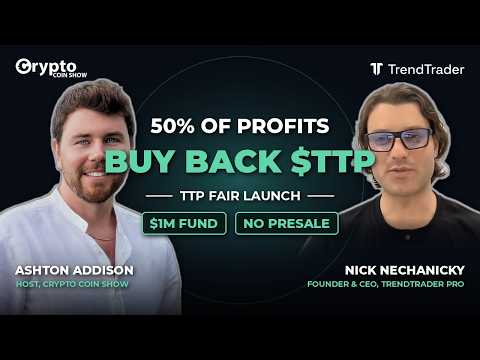 How a $1M fund is meant to fuel a token buyback: TrendTrader Pro’s Nick NechanickyOct 2, 2026
 Illia Polosukhin on NEAR’s privacy features and AI agents in 2026Oct 1, 2026
 How Robinhood built its own blockchain to control compliance and feesSep 29, 2026
 Geo Protocol founder Yaniv Tal launches Geo Debates, its first productSep 28, 2026
 How Brave is expanding beyond ad blocking with Drew PotterSep 27, 2026