
Dr. Mark van Rijmenam on tokenization and the future of work
In this episode
Ashton Addison interviews Dr. Mark van Rijmenam, author and speak on tokenisation, blockchain, fake news, and the future of work. Dr. Rijmenam is working with the Netherlands government on Blockchain and tokenisation initiatives, and shares his thoughts on how corporations can continue to adapt and grow through the COVID19 pandemic.
🤑Custom EventChain Pins provided by Wizard Pins
bit.ly · coinjar.com · binance.com
- The pandemic accelerated digital transformation and remote work adoption that would have taken years longer without the crisis forcing organizational change.
- Employees report higher satisfaction with remote work due to increased flexibility, reduced commuting stress, and more family time despite some challenges.
- Organizations are discovering they can maintain productivity with fewer employees and smaller office spaces, potentially creating permanent structural cost reductions.
- Video conferencing and digital tools are replacing business travel, eliminating three-day trips while maintaining meeting effectiveness and reducing associated fatigue.
- Remote work enables employees to relocate from expensive urban centers to rural areas with better housing affordability and lifestyle quality.
Transcript
Read the full transcript
okay I'm action Addison from event chain for investmentpitch media and FinTech news network today on blockchain interviews we have dark doctor mark van ramen on the founder of maven and the speaker and author on the future of work mark thank you so much for coming to the show it's a pleasure to have you here today thanks for having me extant I'm really pleased to be here you're very
welcome and I'm excited to cover know you cover personally a wide variety of topics so there's so much that we could talk about in your speeches and in your work you've spoken about tokenization blockchain big data fake news and the future of work so it's quite a breadth of topics I know and with the recent acceleration of some of these trends because of the pandemic that's happening
right now in the economy a lot has changed for a lot of companies now can you explain what trends you're seeing currently that are happening and have happened in the last few months with the change in the economy sure so I think it's we live in extraordinary times the world is I think changing really fast at the moment due to the pandemic the world was already changing due to new
technologies coming coming coming and being used by organizations but now you can see that a lot of organizations are forced to move to be common digital business now a lot of organizations have been really struggling in the past years to move to more remote work to allow to work from home and all of a sudden from one day to another they had to work the
entire base it had to work from home and that is a massive change of course and I think in the past few weeks in the first few weeks that happened organization but struggling they needed to find the right tools but now you see that more and more organizations are getting used to it and even if I saw our first research here in the Netherlands which stated that
employees are actually happy happier with working from home because it also gives them some bit more freedom there's been a bit more time with the kids and of course there's also problems you know if you are with three kids at home and you try to work it out to do your work you know it can be really really challenging but I think organizations now have to make the transition to
digital and the fact that they are sort of forced by the circumstances right now I think and also from this is perspective can also be good obviously there are also a lot of challenges when you come to working from home for organizations that can't really work from home and with the whole social distancing policies that we have in the world these kind of things are
challenging for a lot of organizations but for like certain organizations are like this like business that wouldn't have employees and officers I think this is really really changing the game mm-hmm definitely mark and you've been studying the future of work for quite a while now and a lot of people that have been studying this have been saying that
this these trends were gonna happen anyway right like a lot of these digital digital movements and telecommuting and using software to bring teams together was already a major upcoming trend you know do you did you see in your model of studying the future of work something like a pandemic and how that would affect this and and and what how quickly do you think if a pandemic didn't have
happened would have this trend for coming all digital have come in normally yeah well I think I think the pandemic is a real example of a Black Swan and a black thorn was part of my my research as well for my PhD for my PhD at the University of Technology in Sydney which I completed about a year and a half ago where I looked into can you use big data
analytics to sort of discover black swabs which is of course very challenging to do because you know it's it's it's called packs one for a reason and these are events that are very very difficult to predict but in his side it's very clear that you know they would happen the great financial question financial crash in 2008 was one Xbox one and this pandemic is a Black Swan as
well although some people have predicted it is coming famous example of Bill Gates so in 2015 delivered a TED talk stating you know we have to be you know endemic is coming we don't know when for sure it will be coming so the fact that it now arrived I think the world will be different look differently when we come out of this crisis then we went into the crisis and
there might be hopefully some silver linings around this crisis that you know helps us improve our work environment helps improve even the climate but that that remains to be seen for how long this crisis will last we've here in Netherlands we've now even been in so-called intelligence lockdown for a couple of weeks and if we would go back to work tomorrow or next week I don't
think much much of the change that we experiencing that would be would be long term but the longer this crisis lasts the more people get used the new way of working and and the more they are actually experiencing that they look at this new way of working actually quite well works quite well and I think if if we wouldn't have had a pandemic you know people are reluctant to change I think
it would have taken a lot longer for people to change their behavior and for people if organisations large-scale regulation to accept that remote working is a viable option and we've seen quite a few start technology companies in the world who are fully remote and they are thriving and for them it's just business as usual at the moment and I think the
advantages of having digital employees as I call them employees that use tools to work remotely and and to connect with the colleagues and have a lot of advantages and that makes you work a lot more efficient effective and combined with other technologies such as AI where you can create so called an Augmented workforce where you sort of blend the humans and the technology to help people
become more efficient I think that will speed up now quite dramatically in the coming years I think hmm that's very interesting and I like that you touched on that there are positives coming out of this and I could foresee it's it well it's funny how people are reluctant to change but when they're forced to then they get into that new comfort comfort
zone and now that's the new normal right and this is some of the terms that some of these larger companies have been using is the new normal which is in sting to use that term with justice with an unknown you know timeframe of when it's going to end but with these positives showing on you know in morale of the company but also on the balance sheet from cutting expenses
maybe the margins are able to be increased you know I could foresee a lot of companies that may want to keep those margins and not want to increase expenses when this all goes back to normal yes for sure you know I think what what happens often during crisis that you know a lot of people see that happening in America tomorrow went away I think about seventeen million people lost
their jobs already is that after crisis the production of a company gets back to normal quite quickly but with fewer employees so they are able to find new ways of doing the same work with fewer people and I think that's what we will see happening it now as well where for example a video video meetings and they work really well and I think a lot of organization are experiencing look I
don't need to travel to China or to Australia to America wherever to meet my business partners there cost me three days or on the road makes me tired and it's very transit if I can also do with two video calls which is working as well and I think that is something that organizations now start to see and in addition to that what I think that well with people more experiencing the
benefits of working from home and you don't have to go to traffic jams you don't have to you can spend more time with your family but more importantly for example if you live in a big city and you have to pay a lot of big amount of money to buy a small flat to live close to work you can use the same amount of money to buy a free-standing house for example in a more rural area
mm-hmm so instead of going to the office five days a week you go to the office one day a week you're sure you have a nice office in your house and I think you have a much more relaxed lifestyle in the sense that you don't have to be stressed and be in traffic jams and peak hours etc as a consequence is the housing process volkova will go down but also as an offer as a company you need
less you have that fewer MP employees who need to be in the office so you need smaller offices you know there's a lot of change coming in the next year's but it all depends on how long this is gonna last and obviously we hope it's not gonna last very long because you know of the terrible things that are linked to that but yeah how long it's gonna last
depends on how big changes we will see within organizations mm-hmm that's really interesting mark and you touched on the fact that companies will be back to doing business but with less employees in a leaner workforce you know d4c automation and robotics coming in and quickly replacing that workforce or is it just you know more people are able to take on the less
people are able to take on more tasks I think it's gonna be a combination of that you know I think I read an article that in China we saw in months people already moving towards more automation a robot doesn't get sick robot doesn't have to comply with social distancing you know a robot can work 24/7 so there are a lot of advantages of having more robots within your within your company
of course it depends on what kind of business you are but you know it's I foresee that that's trend will speed up because of this because companies see that you know you know hang on I can also have robots and yes it's an investment but with all the benefits I just mentioned the return on investment is quite high as well mm-hmm yeah and humans are an investment as well you
have to train them and and you know health expenses and all of these other things so it weigh your options right so you you were saying earlier that the future of work is going to be very data driven and big data will be a big key you know do you see blockchain as a key component in the way that companies will collect data and use data in the future
of work I think blockchain is going to be a very important aspect of the as I call it the organization of tomorrow basically in my latest book the organization of tomorrow I write that every organization is a data organization and to become and add organization there are four steps which you need to go through one first we need to data file your business and your
processes so you need to collect the data you can't because hot organization then you need to distribute you data and distributed data either through the cloud if it's internal processes and use blockchain for external processes and I think that's where a lot of benefits for for the organization of tomorrow because let's look at the supply chain with the
Box chain you can have very clear provenance of your products moves through the supply chain and whether or not they are compliant with whatever rules and regulations you have in place it makes you know I think they say that if you want to send a bouquet of flowers which is by this stack you need about this stack of papers to come with it if you want to sell it across the world and
with blockchain you know you that is just just calm you know automated and and and digital it's a a major example the second third step is then to analyze your data that you have collected and stored centralized or decentralized in the final steps to automate your business using AI and or smart contracts a smart contract are very useful to to out made certain dishes decision making
processes and I think the combination of of provenance and the combination of automation show that boxing has a lot of potential for organizations to make the business more effective efficient mmm-hmm and you also touched on tokenization on top of the blockchain for companies when they're growing you know what competitive advantage could a company get in its industry by
tokenizing their assets or their securities yeah I think tokenization is going to be a major force within the organization of tomorrow because it offers so much so many benefits you know it's the advantage of being able to tokenize your temple your company or a building enables fractional ownership it enables full liquidity and I think that's something that that doesn't
happen overnight but I think once we have more tokenized at the world and you have full liquidity I think that is going to change the economy because if you if you have if you're a real estate investor and you have a hundred million dollar building you want to sell typically it takes three to six months to sell the building you know give or take if it's a
tokenized building and there's a proper secondary market available then you can sell your your stake in that building almost overnight and so meaning illiquid assets become liquid and that is going to change the economy dramatically and then the third advantage is that with tokenize tokenization you can embed rules in with the token so you can embed
your governance mechanisms within the token so for example if you talk about your your company your shares you can stay the longer you hold your token the more voting rights you get for example and these rules that you command can embed within the token basically embedding the governance in the code I think is going to have enormous potential for organizations Wow and all
of this sounds really great but is it already in use today or I know it's very likely an early adopter and innovators stage when is this going to get to the early majority and do you foresee you know companies throughout different industries using smart contracts whether they know it or not you know with the in day to day business yeah well the interesting thing is if you
look at tokenization and fractional ownership that is already possible every in a lot of places in the world however it's very very complicated very very difficult because we don't use the blockchain for them know if I want to talk token eyes my house for example I can do that but I have to go to the notary to get it all sorted and it's going to be very great expenses is
legislation you know I'm here the project called two tokens and our objective is to develop a roadmap for tokenization for the Dutch government and it took us quite a while to convince that parts of the Dutch government to join forces and and show them the need and the importance of tokenization for Dutch economy so a legislation is one part which makes it difficult to do yes
you can already tokenize your building but it has to go through the offline way of working and to move it to the budget that's simply not in the legislation and therefore it is not possible and the second is what we need is we need a proper secondary market and there are of course security exchanges being developed and there quite a few now operational but the yet the amount
is still limited and there are still some talent so that's also what we need to to do more is to have more ability to exchange your security Tuckerton if you want yeah I'm very excited for the securities market place's of the future and looking forward to seeing one that works really efficiently now that's all the time that we have for the interview
mark I really appreciate you coming on if the viewers are looking to learn more about your work about the future of work or just your research what's the best way for them to learn more and get involved well they can look me up on on LinkedIn just google my might just search for my link my name in LinkedIn you can find me on Twitter you can find me on my personal website which is
basically my my name dot anello comm and I'm happy to help anyone and get in touch and discuss these very fascinating times that we're living definitely thank you so much mark I really appreciate it I'll leave those links in the description box below and let's follow up in the near future ever thank you very much and have a great day
More interviews
 Why banks are building for Web3 in silenceOct 5, 2026
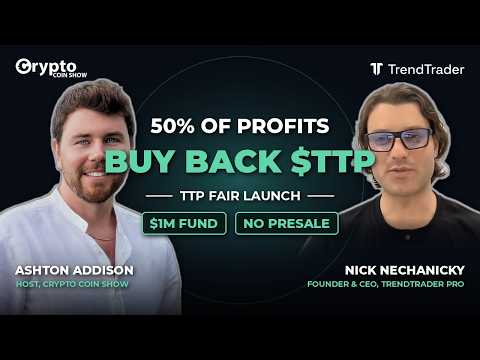 How TrendTrader Pro raised $1M for a token buyback fundOct 2, 2026
 Illia Polosukhin on NEAR’s privacy features and AI agents in 2026Oct 1, 2026
 How Robinhood built its own blockchain to control compliance and feesSep 29, 2026
 Geo Protocol founder Yaniv Tal launches Geo Debates, its first productSep 28, 2026
 How Brave is expanding beyond ad blocking with Drew PotterSep 27, 2026