
Stargate launch brings inter-blockchain communication to Cosmos
In this episode
Ashton Addison interviews Tess Rinearson and Christopher Goes of Interchain Gmbh and Cosmos network on the launch of Stargate. We discuss the recent Stargate launch, bringing many updates to the cosmos network including the Inter-blockchain communication(IBC) protocol, enabling blockchains to communicate with each other in a standard protocol for the first time ever.
This interview is also available on Reuters Insider financial network:
Bitcoin Trading at ByBit Exchange: 10% off the Best Crypto Portfolio Tracker: Get Buy and Sell Signal Indicators built into your charts!:
stargate.cosmos.network · cosmos.network · share.newscasts.refinitiv.com
- Stargate upgrade enables Inter-Blockchain Communication protocol version one, allowing Cosmos chains to exchange tokens, data, and non-fungible assets standardized across networks.
- Tendermint consensus algorithm is one of the oldest and most trusted proof-of-stake systems, enabling faster consensus and lower costs than proof-of-work alternatives.
- Cosmos SDK now includes protobuf encoding improvements and steep sync functionality, allowing new nodes to synchronize with the blockchain significantly faster.
- IBC bridges Ethereum and other blockchains to Cosmos ecosystem through token bridges like Peg, enabling cross-chain asset transfers while maintaining network sovereignty.
- Interchain GmbH houses core development teams for Tendermint and IBC while collaborating with distributed teams across multiple companies and countries in the ecosystem.
Transcript
Read the full transcript
i'm ashton addison from event chain for investment pitch media in the crypto coin show and today on blockchain interviews we have tess reneerson and christopher goes of interchain and the cosmos network welcome both of you to the show it's a pleasure to have you here and i'm excited for this conversation thank you so much you're very welcome let's kick it off
with chris if you could just start with a little bit of background on what your team has recently released with stargate and how that relates to the cosmos network yeah so the stargate upgrade brings the cosmos network through the next warp portal to its new destination including both uh some large feature additions and just continual improvements the whole stack
flagship features for stargate include the enter blockchain communication protocol version one which will allow cosmos chains to talk to each other and to send tokens to transfer data to send non-fungibles any kind of interaction you could imagine like between smart contracts on ethereum on a single chain can also be performed between chains and the cosmos
network using ibc uh stargate also brings a bunch of encoding improvements particularly the addition of protobuf support to the cosmos sdk which is the core software development kit of our staff and in the tendermint site it brings a bunch of performance improvements to evidence handling and security and notably steep sync which will allow new nodes once they join the blockchain to
sync up real quickly wow well that's definitely a lot of updates for the network so that is a huge milestone for your team so congrats on launch and now tess cosmos actually has quite the intricacy inside of the blockchain and it actually has a lot of functionality but a lot of our viewers aren't as familiar with the network as they are with ethereum and some of these other
networks can you just give a little bit more background on the cosmos network and what makes it unique among the industry yeah absolutely so i would say um from a technical perspective there really are two foundational novel technologies that sort of make the the cosmos network able to do the the distinctive and unique things that it does um and one of those things is its
consensus algorithm it uses a consensus algorithm called tendermint tendermint is one of the oldest proof-of-stake algorithms it's one of the most trusted it's been in production um longer than i think any other proof-of-stake algorithm and that's really neat because it lets networks come to consensus very quickly and in a much cheaper way than using something like
proof-of-work so that's um that's one kind of uh cornerstone of the technology um the other is ibc which chris mentioned it's this inner blockchain communication protocol and it's what lets different blockchains send messages back and forth basically and so it allows for things like atomic swaps to happen um and the kind of funny thing about these two things being the the
cornerstones of uh cosmos's novel tech stack is that chris is the team lead for ibc and i am the team lead for tournament course you have representation from kind of both of these aspects uh right here today that's that's great tess and yeah i actually didn't know that about being one of the oldest and you know most secure proof-of-stake consensus i know
tendermint's been in the works for quite a while and now to have this ibc inner blockchain protocol live with stargate is the next step i've been hearing about this blockchain interoperability you know getting all the blockchains to work together right now the majority of the d5 seems to be on ethereum but now polka dot and cosmos and these other blockchains
and it will grow faster if they're all working together so maybe chris you could dive into the ibc update a little bit and what does this mean for cosmos how big of a role is this playing in the growth of cosmos as you continue to grow this year sure thing so ibc uh is uh uh or brings to life the last phase as outlined in the original cosmos white paper
uh the original cosmos white paper talked about tendering consensus of course it talked about the cosmos sdk and the proof of stake system and it talked about the interchange layer inter-blockchain communication layer for ibc so the version of ibc which we're deploying along with stargate realizes that original vision which means that all of these blockchains
which speak the cosmos stack or so to speak which use tendermint some of which many of which use the customer sdk and many of which will use ibc they can all talk to each other even though they're separate sovereign chains with their own consensus algorithms often their own staking tokens their own custom logic for whatever kinds of applications they're focusing
on enabling they can agree on an interface boundary at the ibc layer and use that to communicate so for the particular case of decentralized finance applications that means that just like different d5 contracts on ethereum live in different sets of smart contracts and interface with each other through erc standards for non-fungible token transfer or for
price oracles uh different cosmos chains can focus on different financial or other kinds of applications and agree at the interface boundary over ibc on how to transmit specific kinds of data or control messages such as price information or a token transfer information information on how to settle collateral for a stablecoin anything like that handled over ibc wow
well the possibilities seem limitless and you know with this is just version one i know you're going to continue to work on it and you're working on it on inter chain gmbh um can you talk about is this a separate entity or something that's specifically dedicated for growing ibc and you know what are the goals and advantages of of working inside of inter chain
yeah so actually i can take that one um basically interchain gmbh is was founded at the beginning of 2020 and it's really meant to be this home for open source development for the cosmos ecosystem so the tendermint core team works there the ibc team works there um and there's other actually other pieces of the cosmos ecosystem that are also sort of housed within interchange gmbh uh gmbh
by the way is the german uh abbreviation like inc or llc it's just like the company suffix um because we are based in berlin um and so uh so yeah it's that's really the the mission of it we're very very focused um you know one of the the special things about cosmos is this like truly decentralized very sovereign nature of all of these blockchains and so you know i think our development
strategy actually really mirrors that as well where you'll have different teams at different companies you know in different countries working on all these different pieces and we actually all work i would say quite closely together and quite well together so you know a few a few pieces are housed in an interchangeabh but we have lots of other collaborators in
the ecosystem that's great to hear that you're you know everyone's collaborating and this the size of the space is just so small and compared to what it will become that if you're working together it's just going to make it that much easier to grow and now with the release of v1 ibc there's ethereum and these other blockchains polkadot and some of them that are handling a lot of
the d5 uh transactions and the you know the load of the d5 industry right now and it seems like they are pushing past their limits you know there's there's been the scalability issues with ethereum discussion for a long time now and you mentioned they're using the erc20 standards and nft standards and a lot of transactions are sort of backlogging the network
so what does this mean for ethereum and polkadot and these other d5 ecosystems now that ibc is coming into place we view the role of the cosmos ecosystem and ibc within d5 is broadly synergistic with existing genes we're trying to grow the pie we're not trying to take their slice the d5 ecosystem uh interesting as it is is a tiny subset of the global financial market
and by and large we're focused on making it a more compelling alternative to surveillance capitalism rather than competing with existing chains uh we want to in fact synergize with existing chains so specifically in the case of ethereum and ipc the erc20 for example token standard which is used on ethereum uh can be transferred or will be able to be transferred to cosmos over a token
bridge called pegi which is being worked on within the ecosystem and then toke bins which were originally issued and continue to be issued on ethereum will be able to trans uh to be transferred to cosmos used in defy applications somewhere in the cosmos ecosystem and transferred back to ethereum you could really even consider you know because if the cosmos ecosystem is
everything which speaks except you see ethereum can be part of the cosmic system it's inclusive not exclusive very cool in particular uh i want to emphasize the sort of unique advantage of cosmos within the context of defy which is customizable security model so if you are a d5 project on ethereum you get ethereum security whether you need it or not you
get the exact same security and you have to pay for it so your users have to pay gas fees or you have to subsidize their cash fees for ethereum's consensus in cosmos you have much more control whether you're using uh your own sovereign chain whether you're perhaps using the kind of uh cross-chain validation that we're working on developing you have configurability over exactly
what kind of security your d5 application needs and it can change over time maybe you start out with a prototype and you end up with something that has a lot of users and you need to scale your security over time we're interested in making that possible and we think that will enable a bunch of applications that maybe currently uh don't make sense very interesting and
you mentioned having a sovereign chain um you know working within the cosmos network at the beginning uh in part of the release of stargate you mentioned making it easier for developer access and for people to help run and verify sync nodes launch nodes on cosmos can you just go back to that and touch on how easy is it for anybody to start helping verify the
cosmos network and start building on top of it um yeah i can speak to that so um one of the the major changes that came out with this new um stargate release uh is a much faster way for full nodes to sync to the network so previously you know if you wanted to start a new node on on a pre-existing network like the cosmos network but but really for any
tendermint based chain or any cosmos sdk based chain you know these are building blocks that anyone can use to run their own chains right so so um if you wanted to to start a new node and have it join this pre-existing network that could take days to sync right because you're starting from the beginning and you're replaying every block um but one of the features that we added
uh in this latest release of tournament core is called state sync and so it lets you sync just the application state at the latest point rather than going through and replaying block history and like recalculating application state all the way along so that's absolutely a game changer um for you know people who want to run full nodes on these networks
um in terms of like building you know applications and things like that you know on cosmos or with cosmos i mentioned the cosmos sdk and and the vision of the cosmos sdk is really to be like um like rails like is in ruby on rails but for blockchains and so this idea is that it's this framework where you can you know um there's lots of great tooling in
there that you can kind of mix and match and and decide what kind of kind of blockchain you want um you know i do want to acknowledge that like building blockchain applications is way harder than building traditional web applications um for so many reasons like there's you know this whole immutable history thing which makes it really hard to correct mistakes that you might have
made um and uh you know there's there's lots of aspects like that the decentralization piece of course also adds a lot of complexity um but you know i think the cosmos sdk does a pretty good job it's written in go which is relatively accessible for these kinds of things um and so you know i think in general cosmos is meant to be a very accessible ecosystem
for people um and we're excited that you know we're shipping features that continue to be true to that that vision and those values definitely tests that's great and now having all the sdks libraries and everything to help developers uh make it easier for them to start developing is obviously going to be a huge step forward for growing the network are there other
incentives um or you know things that would really pull people away either to start working on cosmos from other blockchains or just not being involved in blockchain at all and deciding that cosmos is the network that we want to start building on right i could take this i mean we are i would say in general uh or i think we ought to be you know there's the
the we is a royal we there is no central command uh point of coordination within the cosmos ecosystem s and i represented which is one of the uh you know more central entities but there's no key but i think it makes sense to focus much more on attracting developers from outside the blockchain ecosystem rather than competing with other projects for a tiny slivers
of specialized talent in in that vein we are really interested in at cosmos enabling lots of different uh uh you know incentive models for zones so we're interested in providing the framework that people can use to figure out what makes sense for their application and figure out how to route value capture from the users of their application who are deriving utility from it back to
development in their own fashion so we're interested in reducing a bunch of the flat costs by providing these uh platforms upon which they can develop blockchains tend to make the cosmos sdk and ibc and increasing the leverage they can cause this ecosystem through having active deployed blockchains which speak ibc which already understand the protocols
which have active assets that the users can transfer to their new applications this is roughly comparable to how uh you know different apis on the web enable new web application really gain rapid adoption like you could publish an app to the app store and people can start to use it they can transfer in there um you know obviously some companies want
to close these apis because they don't want their network effects to be captured but for the ones who are open they can start transferring in their history and start communicating with all their own friends for example so we're interested to make them as open as possible so that the uh potential value that people developing new zones can offer to uh users is really high definitely
good for the ecosystem and i think that there may be a rush of new development in throughout 2021 uh in in all all of these networks including cosmos so we are running short on time for the interview but i want to talk about the next steps now that stargate's launched an incredible update for cosmos what are the next steps for both of you and your teams
throughout the first half of 2021 yeah so i can speak to the tendermint side of that um you know on the consensus front we're really focused on stability and performance um and you know bringing bringing the software to a 1.0 release where you know people have been using it in production and it actually secures a few billion dollars in value but we have never marked it as 1.0 and so our
next step is to you know cross all the t's dot all the i's and and finally say we have a 1.0 product so that's what's next on the tendermint core side very cool on the ibc front we've honestly been in our cave for the past 18 months designing this protocol and implementing it uh this is ibc 1.0 and we want to see it live and see what people do with it before we
make you know huge commitments to next steps so part of what we're doing what we'll be doing over the next few months is really focused on watching ibc be deployed in the market seeing how people use it seeing how they use different parts of the ibc software tool chain like the core protocol application modules relayers different zones how those correct and let that experience inform
our next steps that said we already have plans for a 1.1 of the protocol which will bring some new features and we're also interested in working on particular application modules that will be open source just like different erc standards are so like there's a you know standard set of erc 721 reference contracts that developers of some kind of application involving nfts
can import and utilize we're interested in building similar kinds of common resources but of course in this case utilizing c mm-hmm well big plans for 2021 uh all the best with with interchange and and with tendermint and cosmos what if there are developers or just uh any anybody who's really interested in learning more about the whole network getting involved with the communities
what's the best way for them to get involved so i would say for the cosmos network there's uh cosmos.network is the website and that's definitely the place to go um if you're interested in our work at interchain gmbh specifically we have an extraordinarily ugly website at interchain.berlin like i said we're very focused on like back-end core blockchain development we
don't yet have any front-end engineers and it's it's obvious um but we're hanging in there so uh that's that's where i would recommend people go great well i will leave those links in the description box below for the viewers tess and chris all the best with the project in 2021 thanks for your time and let's follow up in the near future thank you so much thank you
you
More interviews
 Why banks are building for Web3 in silenceOct 5, 2026
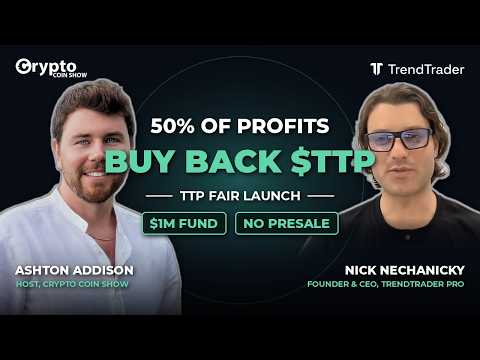 How TrendTrader Pro raised $1M for a token buyback fundOct 2, 2026
 Illia Polosukhin on NEAR’s privacy features and AI agents in 2026Oct 1, 2026
 How Robinhood built its own blockchain to control compliance and feesSep 29, 2026
 Geo Protocol founder Yaniv Tal launches Geo Debates, its first productSep 28, 2026
 How Brave is expanding beyond ad blocking with Drew PotterSep 27, 2026