
Illia Polosukhin on NEAR Protocol’s developer ecosystem and rainbow bridge
In this episode
Ashton Addison interviews Illia Polosukhin, Co-Founder of NEAR Protocol. Illia discusses NEAR protocol's blockchain development ecosystem, some of the Dapps being built on NEAR, the rainbow bridge to the Ethereum Virtual Machine, the functionalities of NEAR token, and more.
About NEAR Protocol NEAR Protocol is a blockchain-based, ultra-scalable, developer-friendly platform for decentralized applications. NEAR’s platform provides decentralized storage and compute that is secure enough to manage high value assets like money or identity and performant enough to make them useful for everyday people, putting the power of the Open Web in their hands.
NEAR Protocol uses a technique called “sharding” which splits the network into multiple pieces so that the computation is done in parallel. Parallelism radically increases throughput and allows the network to scale up as the number of nodes on it increases. With NEAR, there isn’t a theoretical limit on the network’s capacity.
Core contributors of NEAR have won multiple world championships in competitive programming and worked at major tech companies such as Google, Facebook and Niantic. To learn more about the NEAR Protocol, please visit
Illia is the Co-Founder of NEAR Protocol. Illia has more than 10 years of industry experience, including 3 years at Google where he was a major TensorFlow contributor, author of multiple impactful research papers, and a manager of the team building question-answering capabilities for the core Google search.
Bitcoin Trading at ByBit Exchange: 10% off the Best Crypto Portfolio Tracker: Get Buy and Sell Signal Indicators built into your charts!:
near.org · engineeringrobo.com · binance.com
- NEAR Protocol uses WebAssembly to allow developers to write smart contracts in common programming languages instead of learning Solidity.
- NEAR compiled the Ethereum Virtual Machine as a smart contract to enable Solidity developers to build on NEAR without rewriting code.
- NEAR launched a trustless, fully generic bridge to Ethereum enabling applications to span multiple blockchains and access Ethereum assets.
- NEAR's low transaction fees and fast finality enable use cases like prediction markets and NFTs that are economically unfeasible on Ethereum.
- Projects like Ref Finance, Flux Protocol, and Paras have launched on NEAR, attracting long-tail creators unable to participate on expensive blockchains.
Transcript
Read the full transcript
I'm Ashton Addison from event chain for investment pitch media in the crypto Coin Show and today on blockchain interviews we have Ilia polisukin the co-founder of Nera protocol Ilya welcome to the show thanks for taking the time to be here today Ashton thanks for inviting me I'm really excited to dive into near protocol I know your team is working on
some really interesting developments in the blockchain space right now and I would love for you to kick it off just with a high level overview and the focus of near protocol and then we can dive into the details for sure yeah so high level near is a developed platform and ecosystem and part of this platform is a smart contract blockchain protocol that is built to be charted
scalable really easy to use for developers and users but overall there's a lot more other components that we provide to developers and actually the whole ecosystem that has been built around it definitely thanks for that and can you explain a little bit more on how the platform works for developers how it's different than developers just working on you know ethereum ecosystem or some
other blockchains for sure yeah uh so from the start when we when we started we have faced actually that it's was pretty hard to come in as a new developer even experienced developer to ethereum ecosystem and because it uses a different language it has a lot of kind of different tooling the mindset is very different and so our goal was to among other things to make that kind of an
easy come in so we have we are using uh kind of underlying components which are used across the industry so one is a component is called webassembly that's been developed by Google azilla Microsoft and it's powering right now pretty much every browser out there and allows to run pretty much code in a safe environment and so this this gives ability for
developers to write code in common languages that they're already familiar with and then run them on blockchain so that was kind of step one and then really plugging it in into different sites so that as a developer you don't need to like think completely differently which what ethereum is kind of forcing you but you can kind of Step by Step start to bring sounds of
functionality of blockchain and and web3 to your applications hmm that's great and webassembly is it's great to have uh development environments that are being used by major corporations already is the goal to obviously there is a small amount of developers just working on blockchain that originally had to learn solidity a separate language versus the amount of
other languages that you know regular coders already know is it just to get other developers that are already coding in the languages that they're used to to be able to just build on blockchain really easily so it's two sides as a like we definitely want a new like wave of developers right and and the easiest onboarding is the more developers we can
have easier for them to try to get some first results but the other side is actually by using those common languages it allows us to use existing uh work done right so which means even the developers who can learn soluti potentially it's way faster for them to build something bigger as they can use existing code right this is why we have open source in the first place and so an
example of this is actually we took the code that runs ethereum itself so the ethereum virtual machine the code to translate and we compiled it as a smart contract on near so the way we run EDM ethereum virtual machine on near to support the developers who know solidity yeah it is by just using that as a smart contractor near and this is just shows how powerful like it is to reuse
existing code yeah now that's genius and I think I was going to ask about ethereum's coding and you know interoperability or bringing developers that are back and forth because the ethereum virtual machine that's where most of the development is is on ethereum right now and I'm curious to know you know if you're bringing over those developers to the can the
applications work beside each other or is it totally isolated and you know are you involved in blockchain interoperability as the system and the industry continues to grow out to be able to connect applications across blockchains exactly yeah so so interoperability is one of the key components actually we like just last week launched the connectivity to ethereum and this is the
first trustless fully generic connection between two blockchains kind of uh like off of this like two smart contract blockchains and like for for kind of it's a simpler way to say it is like a you know a wire transfer between two blockchains but it allows to send any information between them and in a trustless way right and so like this is the same properties that blockchains
himself have but they usually only provide it within uh within the blockchain itself but now you can actually have it between blockchains and so we build a protocol that allows to connect them and this actually gives ability for developers and users to start using applications that span across multiple blockchains and so ethereum has shown a great success in
kind of financial applications being the source of kind of issuing assets at the same time by its own success because it has a limited capability and capacity uh it pushed all the other more kind of richer application out right and so a lot of applications are looking for a new home or deciding to build from scratch not an ethereum but somewhere else they still want to have access to
all those assets to others like kind of origin of the financial side and so Bridges like this allow to developers to build applications from near and Connect into this existing ecosystem and actually even like from their perspective those applications almost exist like on the other Shard of the of the network right they can just call into them and get callbacks they can
pretty much they kind of behave like if they were just another application in the ecosystem that's great and you mentioned that there are a lot of projects that wanted to build on something more scalable better uh and more suited to their liking and I know that there's a lot of development already going on on your protocol and I'd love if you could touch on you know
some of the major projects that you're that are already building on your protocol that people may or may not be familiar with yeah for sure I think there's like a few interesting ones that already launched uh that that's been having good traction uh one of them is uh in the financials like two of them in financial space uh one is just a regular kind of
decentralized exchange using similar to unit swap kind of automated Market maker uh functionality called ref Finance uh and this will just allowed the people who are bringing their assets from let's say ethereum to exchange them and to participate in the economy while you know doing this in like one second with one second finality and for a fraction
of scent of transaction fee which actually starts to be very close if not better than centralized exchange because you actually have like fools decentralized settlement in one second um so we have also a prediction Market built on top of flux protocol called pulse and so this is this is the same idea that's been actually pitched on blockchain for past I think six years
this was one of the first icos kind of the prediction markets but it never actually worked on ethereum because like ethereum does not have a good uh kind of mechanics to support that um but you know there's like fast-paced kind of transactions with with cheap transaction you can actually create a really rich interface for people to start actually uh
pretty much batting on different outcomes right it can be betting on outcomes of a sporting event it can be very an outcome of a financial event it can be better on an outcome of even social thing right will somebody say something right or like how many times Biden will say something at the next you know uh talk so you can actually have like this interesting experiences and
like you do need to support it way more and like the transaction needs to be really cheap to like make it really engaging exciting and the the third one I want to mention is Paras it's actually a digital uh uh cards like pretty much non-fungible tokens it's been became really popular recently and uh one of the interesting things is it's uh kind of where on ethereum because of high
transaction fees only people who participate right now are just like you know millions of dollars worth of nfg right like people who are doing it are just really um top artists on for us because of really low fees we have kind of a long tail of digital artists who are coming in who are able to make money they have a lot of Filipino artists as well who are actually like maybe this is
first like crypto income for them and they're starting to uh participate in this and because it's cards it's designed from scratch to be composable with other places right so the idea is not just to build kind of an inventory for collection it's also to start using it in games and other like applications and so this is really exciting because it's kind of bootstraps it's inventories
to Zen start building games where you can use those cards as as kind of you know different uh in-game items definitely all interesting projects Ilya uh prediction markets nfts and decentralized exchanges all three really great use cases which all require quick settlement and low fees and I think that those are going to have major improvements running on near as opposed
to ethereum just currently in its current state and I'm just curious about the protocol itself and how you achieved that low latency see low fees you know were you looking at the issues in the you know ethereum 1.0 other blockchains and did you revamp it from the start and you know how did you get that uh really low cost really fast but also balancing
you know decentralization and the other faucets of blockchain when you're developing near protocol yeah that's a great question uh so from the start we so our background is kind of in a lot of decentralized computing my co-founder is coming from a sharded database company called memsql I worked at Google building decentralized system so machine learning sorry distributed
systems machine learning and we were pretty stunned actually by this like in age in 2018 by the state of the kind of of the development of what was in production back then and we actually have started a video podcast ourselves where we were interviewing other protocols so we actually have I think over 40 episodes now of interviewing everyone from you know ethereum itself
Cosmos polka dot and also other major protocols to understand exactly what they're trying to build why they're doing it like what is the trade house and everything and so we built kind of almost like a knowledge base of approaches while also doing our own research figuring out kind of what what is the base best way to to do this uh trade-off and and this is for sure a
trade-off like you you know there's no there's no like kind of Silver Bullet but uh like from our perspectives the underlying system needs to be linearly scalable with Demand right this is what you know if you think of like Google or Amazon or Venus's companies they don't run on like kind of one computer right on one big computer they they actually have a scalable system and like as
Monument grows they can build they can kind of find more computers to run on and so this is done by so-called sharding right so you actually split the work and do it in parallel and so this is not something that is done at kind of normally in blockchains most of the blockchains are not charted they do not contrast anything in parallel or like if they do process in parallel
it's still kind of was it was in a very very limited scope and our our approach is started and kind of we we built uh kind of first like production work in sharding with all the pieces that needs to be done on on the kind of underlying level and that's what allows to kind of not just have flow fees because it's really easy to have low fees when you start because you don't actually have
usage yet like ethereum had no fees when started as well but the goal is for us to maintain low fees as like we can hit you know any any amount of usage rights but it's like ideally billions of users in the world can adopt blockchain by pretty much scaling underneath this user's underlying blockchain and then obviously the kind of Designing consensus for like one second Fidelity
has been the challenge yeah but uh it's pretty much allows to like uh really we call the streaming consensus and so it allows to really kind of uh speed up everything and and still have all the same properties that other consensus which usually like take six seconds for example take no great information and that's really exciting that you did build a video
podcast spoke to the developers and the founders of these other blockchains and got the insights and then you know took all that to build near protocols so I think that that's a great approach to it and I'm guessing that part of the transaction fees and the processing throughout the network of near protocol and possibly for the dapps that we spoke about require uh some interaction with
the near token and I I need to make sure that we get to talk about the new token because I think it's a integral part of the ecosystem and I'd love for you to touch on you know what are the main functionalities of near right now and its main use cases and does it create a sustainable ecosystem for the near protocol for sure yeah yeah and your token is
integral part and and kind of for blockchains in general right the token is almost like a bloodline that like puts it all together and makes it work yeah so so near token has uh four kind of properties or or um that that kind of compose it one it it is used as a security so uh the near protocol is before stake and as a like as a validator as a like Hardware
provider for the system you need to have this token to stake it to really provide you know civil resistance meaning that like we're not going to have infinite number of this nowadays pretending and also to make sure that they are indeed uh not malicious uh the second one is uh transaction fees so yes when you send a transaction you are paying in your token or kind of it
will be converted in your token equivalent and we're actually burning most of the fee so we're actually burning 70 of the fee um and I'll explain in a second why the 30 actually goes to the contracts that were used in this transaction and this actually creates a business model for uh specifically contracts which are utilities for other contracts so let's
say you build some library or some other functionality and maybe it's not end user functionality yet this actually provides you a with a business model on its own because you kind of accruing percentage of the keys very cool so the third one is storage so storage on blockchain is actually the most expensive thing that exists because the transaction processing itself
is a kind of temporary right you process the new done but storage is something that you need to maintain over a long time and so ethereum for example the current economic model is not sustainable it's actually just changed parameters for the Berlin hard Fork to make it a little bit more sustainable but they actually have had like a growth of storage where
people don't actually freed up and this is like same as Bitcoin like most of the states are very non-sustainable uh and and lead to like uh kind of potential issues and there's also like a very loose coupling of economic parameters around that so we actually use a storage staking where you actually need to keep someone of near token on your account or
a contract account to cover for storage so as more as you use more storage the Monier gets kind of locked in that uh to kind of prove it you can think like for as a simple you kind of mindset there's like a minimum balance that you need to maintain on your banking account right and but the more the more data you want to store the bigger the minimum balance
and and the fourth one is obviously it's a kind of financial uh uh operations right so like that's taxes and other uh like applications are growing and we already have few uh which are you know locking near in issuing some other assets like uh leveraging loaning uh or doing like stable coins uh this becomes like an important piece of the system as well
pretty much you're kind of storing value in that and then reusing it in other places so this is kind of like four integral parts and so we'll just what this allows you know specifically the transaction fee burning uh the way it works is validators receive Force taking and providing hardware and running the blockchain extreme transactions they receive
inflation right so there's six percent allocated to these validators while we're burning all the fees so as more transactions happen on blockchain actually the total inflation starts to reduce right because we have a fixed kind of fixed reward to violators but the number of transaction grows and so there is actually a threshold at which the amount of near will start decreasing
because we've still paying fixed kind of fixed percentage to the values but we're burning more near in transaction fees obviously this is like at a you know at a great scale of near network but that's kind of one of the goals is actually you you can have this uh system where near Network becomes kind of deflationary um very cool and I think that was something
that ethereum recently introduced as well to you know and they're working yeah they're working on similar uh I I mean some of their ideas to be clear like but they have not actually decided to implement this this specific uh plan yet yeah well thank you for all of that explanation that that really helps understand the ecosystem altogether and we are running short on time but I'm
curious I'm guessing as you continue to grow you're looking for more developers to build dapps uh validators yeah participants in the ecosystem is there anything specifically else that you guys are interested in areas that you're growing and how can all these parties learn more yeah for sure well for learning more definitely go to neo.org and there's
like a lot of kind of content and education materials and also uh ways to participate from what we call guilds which is kind of our community of communities to you know apply for Grants and and kind of other ways um yeah I mean I think like developers and people who want to kind of be early adopters of the systems and kind of come in and start using some of those
applications and really participate into the economy had been built uh like from our our belief is kind of you know the first few things will be a kind of this more creative people coming in and building out new things right either through building applications or building you know art music all those things kind of on top and then really bringing in the mass adoption through
that through kind of new content through new interactions and experiences and so really welcoming more creators more creative people to come in and really explore what they can do with this New Primitives and really kind of create new world right with us that's very exciting Elia all the best with near protocol I will definitely be following it along
and let's follow up in the near future thank you Ashton thanks everyone
Related coverage

More interviews
 Why banks are building for Web3 in silenceOct 5, 2026
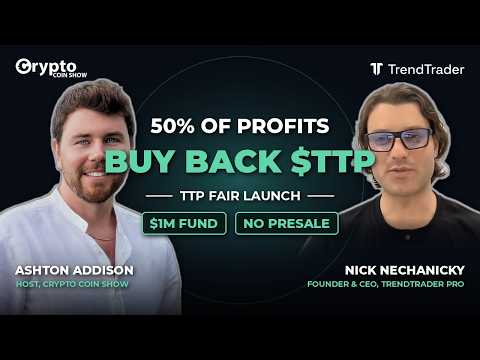 How TrendTrader Pro raised $1M for a token buyback fundOct 2, 2026
 Illia Polosukhin on NEAR’s privacy features and AI agents in 2026Oct 1, 2026
 How Robinhood built its own blockchain to control compliance and feesSep 29, 2026
 Geo Protocol founder Yaniv Tal launches Geo Debates, its first productSep 28, 2026
 How Brave is expanding beyond ad blocking with Drew PotterSep 27, 2026