
Panther Protocol prepares for institutional DeFi adoption in 2025
In this episode
Ashton speaks with Anish Mohammed, Co-Founder of Panther Protocol, on the growth of institutional interest in DeFi, the insurgence of interest in crypto assets, How Zero-Knowledge ZK proof technology functions and aids in preserving proprietary information for institutions, and the upcoming next stages of the Panther Protocol launch.
- Panther Protocol uses zero-knowledge proofs to enable private transactions on public blockchains while maintaining KYC compliance for institutions.
- The protocol employs multi-asset pools where transaction origins remain obscured, similar to traditional finance dark pools used by major institutions.
- Institutional traders can preserve competitive advantages and execute large positions without transparent blockchain visibility that would impact market prices.
- Selective disclosure mechanisms allow users to reveal transaction history to regulators like the IRS while maintaining privacy from the general public.
- Privacy-preserving DeFi infrastructure addresses a critical gap preventing institutional adoption by replicating confidentiality standards from traditional finance.
Chapters
Transcript
Read the full transcript
I'm Eshan Addison from the CryptoCoin Show and today on Blockchain Interviews we have back with us Anish Mohammad, co-founder and CTO of Panther Protocol. Anish, welcome back to the show and thank you for taking the time. Uh thank you for having me. You're very welcome. Happy New Year. Happy New Year to you as well. Um I think it's a big year for for crypto in
general and for DeFi and for institutions getting further involved. 2024 was quite the year uh with the ETF uh resurgence of of Bitcoin inflows and I feel like they're going to be trickling down into the rest of crypto and and realizing the potential it has to disrupt uh the financial industry. I would love to start off our conversation by first of all hearing a little bit
about yourself, uh why you founded uh Panther Protocol and and and what exactly it's doing in aiding the growth for institutional DeFi and for Web3. So, my name is Anish. That's right. Uh as you introduced myself, so I've been in crypto for I think 12 or 13 years. Crypto I mean Web3. So, uh I've uh
been involved early a bit in the Bitcoin side, very early, just uh not doing any programming, just helping the community and helping them with mining and things like that. In 2013 I became an advisor to Ripple. Uh this is the time when Vitalik, you know, apparently, that's what I see, Vitalik was an intern in uh uh Ripple and uh then I, you know, while
I was still there I helped the Ethereum team where I became one of the original guys in the swarm team. I was a reviewer for the orange paper of Ethereum. Uh yeah. I left swarm team like around 2018. In between I ended up building or helped build a whole bunch of protocols, Boson, Ocean, Pillar, all those protocols, a long list of And uh somewhere along the line my
interest in zero knowledge became something more than an interest. So, I had you know, two sets of zero knowledge startups. And two of them, and uh Panda happens to be the third one. And the whole idea is around the fact that in public blockchains, all transactions are public. So, effectively what that means is if you had an alpha and you were trying to
some advantage of that thing, that completely disappears. And in a sense, having privacy is um in many ways key for functioning of society and functioning of finance. So, you know, that ended up resulting in creation of Panda protocol. Mhm. Yeah, that's a great segue to to understanding more about blockchain. And yeah,
at least with the way that people know Bitcoin, every transaction is public, the ledger is there. We can look up any balance or any transaction in in since the inception of Bitcoin. And in tradfi there there's there's definitely ways to have a competitive advantage as a hedge fund or VC, being able to make positions without everybody looking into the
blockchain of the last 15 years. So, how does that work in setting up a platform that allows this to happen? Uh the transactions are on the blockchain, but there's ways to trade as an institution that that doesn't have all of your records all transparently showing to everybody. Yeah, the way I would describe it is like um it's pretty straightforward. You
have a third party, just like you have for everything else, who does the KYC. So, as a user, they come in, they talk to the KYC provider. Uh you can think of it like a KYC provider as like a big room with two doors. A green door a door with a green light and a door with a red light. Red light is when you fail and green light is when you succeed, right?
So essentially, you know, you don't see who's coming in or out. You get a green light and they get an envelope, right? That's how you can think about it. So that means it's like you being sent to a physician to examine. If you have a disease, you you know, you get a red and if you don't have a disease, you get a green, right? You have an envelope that's been sealed
and given in your hands, right? So you, you know, you could challenge if somebody says something wrong. You could always challenge them to give you the envelope and you can open it and then that's it. Then you know for sure, right? But the assumption is like if you can verify and the the check on it when the checks are on it, you know, already know that that they haven't lied to you,
right? So this is literally how the Panda works in a sense like you have this third-party service provider who does uh you know, uh KYC for us. It's called Purify special of Dubai. They then provide uh at the back of it uh you know, some ability to correlate between the transaction that transaction in terms of the interaction between the user and the KYC provider.
And then once they are done with that that they they have a derived address that's been provided by Panda protocol which then they use to do transactions in the multi-associated pool. So the multi-associated pool again I can go back to the room scenario. You have a very large room with lots of people. So anyone in the room could be doing the transaction.
And the only thing you know is like you know, there are lots of people in the room. Say assuming you even if you know the number of people in the room. If you see somebody leaving, you only know you have a one in n which is n being the number of people. Chances of guessing who that is, right? So this is literally how a multi-associated pool works. And
when a panther protocol connects to a D5 protocol everybody in the D5 protocol sees this panther protocol doing the transaction but not the exact you know address from which it is coming. And there are instances where you can actually do a swap with a new address that's a derived address that's being created by panther protocol for the given user but it still doesn't you know
the link between the user's address and the new address is a zero knowledge proof in that sense so you know it's not that easy to actually track it back to the user. So effectively what you can think of is like A you have a KYC B you have the ability for the transaction of the KYC to be revealed if say HMRC you know IRS comes to you. Then you have the selective disclosure
mechanism which is a you you as a user can reveal like that these transactions were done by me right? And then you have a private multi-asset approval that allows you to keep your alpha and interact with the D5 protocol and at the same time because on this side you clearly are prevented from interacting with any of the people from the OFAC list or other things. So that's a simple
way. Mhm. I mean wait. Yeah no it's it sounds amazing for for institutions. Um I feel like people are underestimating this technology and maybe it's just as a younger person who's starting native D5 and not really used to the traditional financial world where that kind of stuff is probably standard. Um people just came in and said well this is how it is with with
Bitcoin and and blockchains being all transparent. Um do you think people are underestimating the value this has in getting institutions warmed up to D5 that are used to this kind of stuff in traditional finance? I mean I I typically describe to people with the example of uh Renaissance Technologies and they have you know the the return, right? Like
Um I'm sure people will recognize Simon and Simon's Institute you know, the Renaissance Technologies and it is the entity that's there. Medallion Fund is a fund. The Medallion Fund has north of 40% return consistently for the last 20 plus years. It's only available to the employees that are there. And the thing there is like when you have a public market and imagine you
were say Mr. Elon and you had a a small fight with Mr. Trump and you have to get some money to do something. And you say I'm going to sell a bunch of shares of Tesla. The moment he says that, he can absolutely be certain that that price of Tesla is going to tank, right? So, you actually want to have a mechanism to do this. And then the traditional in the traditional finance markets is
what you call a dark pool. So, yeah, I mean, you are absolutely right in in your kind of assumption. Again, I don't have a crystal ball. So, I've been and a retail banker and I've done some finance, so I kind of understand things. But that doesn't mean that I know exactly how these people are going to behave. So, it is very possible given they have this requirement of KYC
disclosure, KYT, and uh need to do transaction during transaction. Not before or after, during transaction. Mhm. So, protocols like Panda should have a lot of value for them because they're very used to doing the same thing. Mhm. And you mentioned at the beginning your interest in in zero knowledge you know, became more of a reality with this. Can you
talk a little bit more and explain how the zero knowledge part fits into that? From what I understand, you're talking about there's a room full of people, it's hard to understand who it is. So, in a sense, you have you you don't need to know the knowledge about who it is, just the fact that they're in there and they're approved. Yeah. Uh that's pretty much what it is.
So, it's like in the layer one in any layer one which is layer one means meaning uh a Bitcoin or Ethereum. They typically do kinds of mechanisms to keep track of value. One is accounting. So, you know, if I send you 10 bucks, you you know, my account gets reduced by 10, your account gets increased by 10. And the other one is a UTXO model. UTXO model means like I have a UTXO, I have
an unspent use UTXO. And then you know, if it's my spend it I kind of no longer have it. So, this is the model that Bitcoin uses and kind of privacy protocols usually have the you know, um UTXO model. And a typical UTXO model the thing is like you know, once you you know, once you see it, you know a lot of detail about it. If you actually use zero knowledge proofs, the thing is like
you can check whether it's been spent or unspent. And if it's not spent, then it could be spent, right? And the contents of it is not known in that sense and the verification doesn't require the contents. So, that is the basis of how you know, privacy protocols use ZKB. And in an extended version, if you were to go back to the room and people in the
room kind of question, the simplest way of thinking about zero knowledge proof is like you have a you have this room and this has one door. And uh you know, I make a claim that I can escape from this room with the other door. So, you and I come to the room, I am the prover, you are the verifier, you stand outside the door, you close the door behind me. 5 minutes later, you see me
outside, you know that my claim is true. And the fact that you don't know how I do it is zero knowledge-ness. And the soundness is the fact that, you know, uh I can only do it if, you know, if I'm telling you the truth and completeness is as long as I tell you the truth, you'll be convinced. So, that's what zero knowledge is all about and that's how zero knowledge is
applied to this, you know, multi-asset shielded proofs to achieve what we need to achieve to provide privacy. So, it's a typically you take some model and you take some model that uses a zero knowledge proof to actually verify that particular token is unspent. Mhm. And is the zero knowledge proof technology able to actually integrate into the crypto assets
themselves? I've seen this notion of a Z asset and I'm not sure if that actually changes into a new asset or if that's just a part of the mechanism of being able to trade. Yeah, it's a more of a mechanism of keeping track of things. So, it's like you can actually in there are multiple ways to do this. So, the way I would describe it is like you can uh
you know, really do the mechanism of wrapping. That's one way you can think about it. So, you know, you can actually have a wrapped BTC. BTC is, you know, somewhere else, but you have a wrap. So, you can almost do the similar thing and then do the shielding and then do transactions in in a different layer. Mhm. But, you know, the the the the kind of Z account,
while they're, you know, it's it's only useful for certain things. So, if you wanted to uh what we call a Z swap, then the Z account makes sense. Otherwise, Z account doesn't necessarily make that much sense in that sense. So, like it's a functionality that is built to support a lot more than what we currently exposing. Let me put it that way. So, the protocol in a long, you know, larger
sense of speaking has a lot more functionality than the current version is exposing it to the users. It can actually be you know, support a lot more things and a lot more things uh require certain behaviors of identity within the protocol and that's being implemented in the protocol. Mhm. And with that notion of the Z assets and creating a compliant platform for DeFi,
is there you know, there's DeFi on so many different blockchains uh and and the those blockchains are have different technologies underlying them. Is there a limitation or a chain that works best or something like hey, the the compliance will only work with Ethereum or other blockchains? So, the way I would say is this is like you know, uh in general, if I were to think about
it in that sense, uh it will work for any EVM compatible blockchains because uh the way we are implemented about the protocol is mostly little on all of this the smart contract layer. Mhm. So, because it's the smart contract layer, you definitely need to be represented on the smart contract layer than anything else. So, if you have a layer one that actually has
uh you know, Ethereum-like characteristic with an EVM, the those things will be ideal candidates for doing the protocol. Mhm. That's good to know. And in terms of institutions really warming up to this, I feel like obviously that having the technology is important, but a lot also wait for uh regulatory frameworks or green lights, you know, as we saw with with the ETF
getting that approved so that people can actually buy in. Um in terms of compliant DeFi or or zero-knowledge proofs in you know, having that coined inside of a regulation that comes out, is that something that you think is happening? Are they waiting for it or or does the technology come first and then the regulation gets written. So, my my impression, again, I'm not a
lawyer, I'm not a regulator, this I'm just an average Joe Block who has been building protocols, right? So, uh my feeling is like uh they they're waiting for the possibilities. So, zero-knowledge proof is a possibility. They don't have the proof that it exists. Uh they haven't gotten the proof that zero-knowledge proof exists as a zero-knowledge proof.
The joke's aside, like, you know, if they want to actually do this, they will have to, you know, wait for stabilization uh now uh standardization and then a bunch of processes and all those things. So, I don't think that we have reached the level yet. We are still uh you know, a bit further away from standardization. We haven't gotten all the pieces together. So, you know, I
I suspect either the need for these people or the regulatory requirement would drive this up. So, when that happens, the whole floodgates would open up and this adoption will happen like that. Yeah, that makes sense. And building the technology is, you know, it it's not something that can be done overnight. I know Panther has been been working on this for, you know, almost since the
inception of DeFi, understanding in the long term, this is something that could take over the financial market or institutions that are trading in in TradFi are going to need this. Um it Can you talk a little bit about, you know, the the the journey of building this, the technology underlying, I'm sure it's been a a process, and if it's in in the testing
phase right now, and and how that's going. So, we pretty much are done. Like, uh we have have uh you know, phase nine kind of done. We already have the audit completed. So, we need to require some uh legal entity to be in a a s- a slightly crypto-friendly jurisdiction, so we can actually do the deployment. So, we're waiting for that to be set up. So, if I
um if my understanding is correct, the paperwork is already there. Uh I think somebody needs to press a button to instantiate the entity, and then uh this thing has to go across to the other side, and everything else will be done. Mhm. That's great. And so, in terms of uh the the road map for 2025 and and keeping up with everything in the industry, um
what are the next major milestones? Obviously, the entity that you're talking about. Is there anything else to mention in terms of the next steps of growth in in making this happen for institutions? So, the thing is like we have a requirement called a global manager. Global manager is the entity that does the license. Or you know, virtual office which
virtual license service provider license. So, you would have uh you know, these these folks already in the ecosystem. Plus, you know, protocols in DeFi that has alpha, plus the regulators who understand this. Then, yes, we could possibly jump in and get things done. The tech is pretty much done, right? It's just a question of governance and the the the counterparties in essence.
Mhm. That's the hard part that that you've finished off. So, uh that's exciting to hear. And do you do you think um in terms of the overall industry, do you think 2025, you know, 2024 was was huge for Bitcoin. Do you think there'll be more interest in uh compliant DeFi and just DeFi in general from TradFi getting interested in how to get further involved in Web3?
I mean, what my assumption here is like, you know, given the change in uh leadership in the US, Mhm. and the pro-crypto uh attitude they have been giving, it's very likely that that will be the case. And uh you know, you will have like a prolonged but slow but steady, uh you know, improvement in the ecosystem in uh you know, the whole L L1s and L2s.
Mhm. And uh you know, that that will propagate up and down the ecosystem. That will result in increase in value of Ethereum, Bitcoin, and a whole bunch of things. That that's my assumption. Mhm. I'm looking forward to to seeing how it plays out, especially with this new administration coming in this January. And let's see how that trickles into all of Web3 and adoption. So, I'm looking
forward to it. Yep. Um Anish, what's the best way to learn more about these technologies that you've built, about ZK, and follow along with the growth of Panther? So, you know, you could go to pantherprotocol.org or you know, panther.org or pantherprotocol.io. Both the places have information and it should guide you to guide you with the protocol development
so far and what are the latest thing in that sense. Sounds great. I can leave those links in the show notes below. I'm wishing you and your team all the best in growing compliant DeFi. I'd love to see more institutions involved in crypto and and just grow this because I believe it's the future of finance. I'm looking forward to to seeing how it plays out
with the growth of the Panther Protocol. So, thank you so much, Anish, for for the insights on the industry, on Panther. I'm wishing you and the team all the best and I would love to follow up in the near future. Okay, thank you very much. And have a great evening.
More interviews
 Why banks are building for Web3 in silence: Kresus’ Dr. Jordan KnechtOct 5, 2026
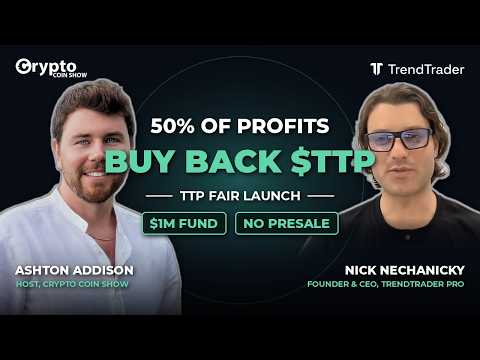 How a $1M fund is meant to fuel a token buyback: TrendTrader Pro’s Nick NechanickyOct 2, 2026
 Illia Polosukhin on NEAR’s privacy features and AI agents in 2026Oct 1, 2026
 How Robinhood built its own blockchain to control compliance and feesSep 29, 2026
 Geo Protocol founder Yaniv Tal launches Geo Debates, its first productSep 28, 2026
 How Brave is expanding beyond ad blocking with Drew PotterSep 27, 2026