
Clayton Menzel / Babylon
Clayton Menzel on Babylon's native Bitcoin staking without bridges
In this episode
In this episode of Blockchain Interviews, Ashton Addison speaks with Clayton Menzel, Head of Business Development at Babylon, to dive into the groundbreaking ways Babylon is transforming Bitcoin’s role in Web3. Babylon is enabling users to stake native Bitcoin without wrapping, bridging, or peg-in mechanisms — solving one of crypto’s longest-standing challenges. We explore how their protocol leverages Bitcoin’s unmatched security to secure other blockchains through "Bitcoin Supercharged Networks," all while maintaining full self-custody for users.
Topics covered: What Babylon is building and why it matters How Babylon enables native Bitcoin staking without moving BTC off-chain The role of Finality Providers and Babylon's decentralized validator network Unpacking Babylon’s reward structure for stakers Upcoming integrations and the future of Babylon’s roadmap
This is a must-watch for Bitcoin holders, staking enthusiasts, and anyone following the evolution of decentralized security. 🔗 Learn more about Babylon:
babylonlabs.io · @babylon_chain on X · docs.babylonlabs.io
- Babylon enables native Bitcoin staking on the Bitcoin network without wrapping, bridging, or moving funds off-chain, maintaining non-custodial control.
- The protocol uses UTXO transactions and Taproot to lock Bitcoin in staking positions while keeping assets in users' own wallets.
- Babylon launched Babylon Genesis as the first Bitcoin Secured Network, with plans to allow additional protocols to connect to Bitcoin security.
- Staked Bitcoin positions can be represented on other ecosystems for liquidity benefits while securing protocols through Bitcoin's security guarantees.
- Institutions holding Bitcoin in ETFs represent a significantly larger addressable market for staking than the entire amount of staked Ethereum.
Chapters
Related coverage
 Bitquery finds $6.01M drained from 44,000 Keplr wallets via Google and Apple loginsNov 8, 2026
 Babylon Labs submits native bitcoin collateral proposal to Aave governanceOct 18, 2026
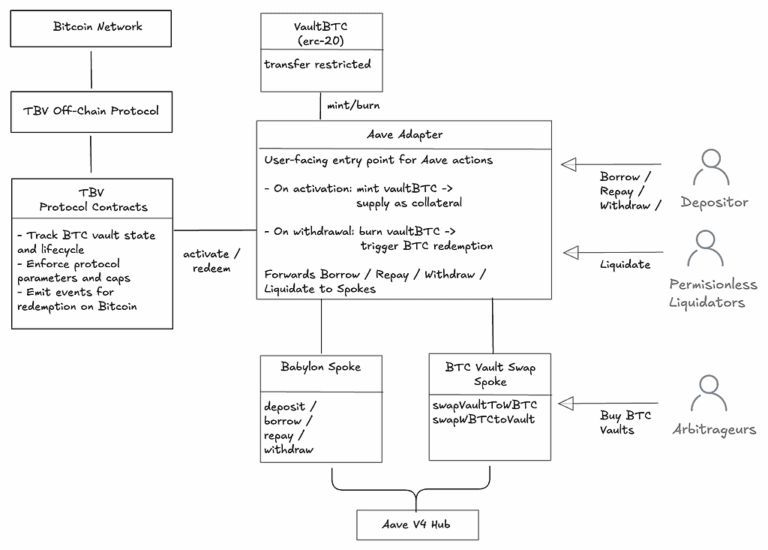 Aave governance proposes native Bitcoin collateral via Babylon vaultsOct 14, 2026
 OKX launches xBTC on Sui while Bitcoin nears $109K ATHMay 22, 2025
More interviews
 0G Labs' Michael Heinrich on cheaper open AI modelsNov 19, 2026
 Why Wall Street is moving toward 24/7 trading in 2026Nov 13, 2026
 How Wallet V is letting AI agents trade while keeping your keysNov 10, 2026
 How Silent Payments Keep Your Bitcoin PrivateNov 9, 2026
 How XYO is building proof in a world of AI fakesNov 5, 2026
 How Cap financed a Hollywood film with onchain creditNov 4, 2026