
Adam Liposky on launching production-ready blockchains
In this episode
Canopy Network Co-Founder & CEO Adam Liposky joins Ashton Addison (Crypto Coin Show) to break down Canopy’s thesis: make launching a chain feel like shipping an app. We talk about what “Replit for Web3” actually means for builders, and why the next wave of teams may choose app-specific L1s once the tooling, security, and interoperability are handled out of the box. We also cover what Canopy is building next, including one-click L1 deployments and the L1 Launchpad, plus what a developer should try first if they want to test the stack this week.
canopynetwork.org · @CNPYNetwork on X · linkedin.com
- Canopy reduces application layer to 200 lines of code using templates, enabling developers to build in familiar languages like Python, JavaScript, and C#.
- App-specific chains offer flexibility, control, and economic advantages over smart contracts by allowing upgradable logic and rapid iteration.
- Canopy has 50,000 daily active users on testnet with early traction in games and DeFi applications after two years of development.
- Permissionless interoperability enables one-way connections between chains, allowing atomic swaps and asset movement without permission from other chains.
- The platform targets citizen developers and AI-assisted builders, aiming to reduce blockchain deployment complexity to match shipping traditional applications.
Chapters
Transcript
Read the full transcript
I'm Ashton Addison from the Crypto Coin Show, and today on Blockchain Interviews with Adam Lapowsky, co-founder and CEO of Canopy, here to discuss making it as easy as possible to deploy applications and and code in Web3. I think everyone's becoming a coder of some sorts as they get into AI, and these tools like Claude are making it easier than ever, but
there's still a lot of barriers to entry to deploy into the blockchain side and then actually grow your business from there, and so many more steps that we're here to discuss today. Adam, thanks for taking the time. >> Uh thanks for having me on, Ashton. Really appreciate it. >> Yeah, I'm I'm excited to learn more about this because I've personally just
become a a developer with Claude and these AI tools, and I think a lot of people are finding it easier than ever to start coding, including the people who are already developers, making it way easier. But once you get into blockchain and then the infrastructure and making it decentralized or setting up it properly, there's a few more steps that I'm still not at that point yet, so
I'm going to learn a lot from this conversation. >> Yeah, that that's exactly right. I mean, that's our big bet. If you want to sum Canopy up in one big bet is that there's going to be more developers out there that are not like hardcore trained developers, they're you know, citizen developers, anyone working with AI. >> Definitely. And so, can you explain if I
have a little bit of knowledge with Claude or at least I have the tools, and and I'm sure there's many other Web3 based ones that I'm that I'm not familiar with. You could probably build in any platform, but how do I take the tools and then use Canopy to, you know, how exactly can Canopy jump-start my operations to to get things running with as little technical knowledge as
possible? >> Yeah, yeah. So, the way we think about Canopy is we want to be the easiest way to go from idea to product in Web3. So, we kind of think of about ourselves as like Replit for web three. Come with an idea and co-build alongside AI. And what we've done to to do that is we've created all this scaffolding scaffolding and we've created all of the
tools necessary so that AI is hyper effective with Canopy. And so, all you have to do is take the the language of your choice. So, we've created what what are called Canopy templates. It's essentially an application layer in 200 code. And that fits really well within the context window of AI. So, you come up with your spec, your logic, and you can go from an
idea to application co-building with something like cloud code in about 20 minutes. We've actually got a demo of this done go from like just an idea of something like a polymarket, a prediction market, to production ready code in about 20 minutes. It's pretty cool. >> Wow. I'd love to build a future prediction market that could reach a 10 billion dollar valuation in
20 minutes. That would that would be great. >> Exactly. [laughter] Yeah, that's the dream. That's the future, right? >> For sure. Well, it's making it easier than ever. I was reading Canopy about app specific chains or app chains. You know, I think I I've built I've tinkered with a few small apps, but what's the difference or the specifics on like app
chains versus a dapp? >> Yeah, so the the the primary difference for us is just flexibility, control, and economics, right? Like those are the primary reasons why you'd want to consider an application specific blockchain or an app chain over kind of the traditional infrastructure [clears throat] that's available in the space. If you look at something like a a smart contract, it is
by design immutable and therefore non-upgradable. Now, there's a bunch of different fancy things you can do to make them upgradable and you can you can implement complex architectures to do so. But, kind of the the essence, the core of a smart contract is you deploy a thing and you can leave it there permanently. And that has all sorts of great reasons for
being, that has all sorts of great design concepts baked into it. But, what we wanted to do as an opposition to that is create a system where it's flexible, it's dynamic, it's upgradable. And at the end of the day, because you can control the application and the logic and all of the economics, you have much more flexibility and design control over the entire system. And this is
really important when it comes to co-building with AI or, you know, as people kind of refer to it, vibe coding, right? So, if you come to the market with an idea and you need to change this or that, you need to be able to do those changes in minutes or hours, not weeks or years. And so, the architecture we've come up with with app chains is merely so you can have all
of that control and it's all under kind of one reasonable and very simplified process. We can talk about the layers in the stack, we can talk about the shared security, but at the end of the day, what really matters to us and what really matters to developers is they can code in the languages they already know, like Python, C#, JavaScript. Like, they don't have to
learn anything, they're not they're not like learning Solidity from the ground up. And then they can come with an idea and get immediate value out of our system. And listen, if you want to go and tinker under the hood, you can do that, but we want to provide that value out of the gate so that the average person, like me or you, can create an application and launch it tomorrow.
>> Definitely. Uh with the types of applications So, you guys are in testnet from what I understand. So, are there already there's some developers or in-house that that are testing it right now? Like, how long have you guys been working on this? >> Yeah, we've been working on this for about 2 years. Probably a little over 2 years in fact. And so, you know, we started by
developing the canopy stack, which is that development stack and and the core innovation there is is reducing the application layer into that 200 lines of code with those canopy templates and being able to write in any language. >> [clears throat] >> The the next thing we produced was the the shared security system of course, which is really important for security
bootstrapping as you know, blockchains can suffer from 51% attacks or other staking attacks and it's really important that you have shared security or some security out of the gate. And then finally, over last few months getting to the answer to your question, we've been really drilling down on like how do you optimize this for the everyman, the every developer the the
vibe coder. And in fact, our team has gone from something like doing zero development with AI in the very beginning and kind of write everything by hand kind of the old school path. Now doing, you know, like upwards of 50, 60% of our code with AI and it's been working extraordinarily well. We've got people developing products in-house like the the predictions marketing I
mentioned. We've also incubated about half a dozen teams who are building anything from games to D5 protocol. And then on testnet we've got about 50,000 daily active users and it's really all over the place. They've gone from, you know, memes on one end of the spectrum kind of very unserious like testnet style stuff to I've seen some pretty really interesting
like deep in projects and some like really specific infrastructure stuff that I'm really excited about. So, it really spans the spectrum. It's hard to predict. Like people have really put a lot of things out there because we've got so many active users. It's hard to kind of correlate exactly what's going to stick. But, if I had to guess, games and DeFi's
seems to be our sweet spot so far. >> Yeah, that's really exciting. That's a huge amount of users for the testnet. And and and it's it's it's getting you're making it so easy for people who aren't developers like myself to to tinker around. I'm excited to see some applications there on the on the DeFi side and the finance applications. So, with app-specific chains and what's
being built through Canopy, once you go live are people that have assets on Ethereum or Solana for example, can they do they have to bridge in or how can I interact with sort of the the overall crypto ecosystem to move funds around into the app? >> Yeah, this is something we spent a long time thinking about long time working on. The solution we came to came up with was
a thing we call internally permissionless interoperability. It means that anytime that you want, you can create basically [clears throat] a one-way interoperability solution with that chain. So, you can basically understand what's going on in the chain, read and react to it all without having permission from the other opposing side. Which gives you the ability to do things
like atomic swaps. So, if you were an application and um you had a login like we do for our own application which happens with MetaMask wallets or Ethereum wallets, you can have these users basically swap into your assets with just a click of a button in under you know, like a single block. So, something like 5, 10, 20 seconds and end up with assets that
are on your network. And off-boarding is basically the same process just an atomic swap out. It's just kind of one use case for exactly how you can kind of connect in and immediately have that value. But I think the future of interoperability on Canopy is is is one way permissionless and also two way where the two sides can talk to each other more effectively enabling more
complex applications. We've also been exploring some externally owned account stuff recently which could enable some really exciting DeFi applications that we aren't quite ready to share, but I think for us it's just a matter of like making the process as simple as possible and allowing the AI to figure out what kind of connections you need based on your particular use case and
then just being able to simply plug in via kind of either running a node or connecting to an RPC and then you're off to the races. >> Definitely. And on those DeFi apps, say individual or small team of developers make an amazing DeFi app there's all those other facets like the the security, the finality, keeping the cost low of the network to attract
big money into it. Is that something that that Canopy sort of like the underlying infrastructure and the speed and the reliability, that's something that you guys are covering? >> Yeah. Yeah, exactly. So So what's really interesting Ashton is like essentially we we think about the security solution that Canopy chain itself is kind of like external like
validation as a service. Except you own and control the validator set yourself. So you don't have to worry about all the the messy coordination that has to happen to spin up your security. You don't necessarily worry about like incentivizing a major security budget. You don't have to mess around with um all of the kind of setup costs and the months of recruiting and
convincing these validators to come online. We have professional validators all set up. Uh when you deploy onto the Canopy stack or using the Canopy stack, you inherit all of these principles and then you simply just plug into the security solution. If you come through our interface, we do all that behind the scenes. So, you go from uh connecting your GitHub and bringing in your code
and selecting your repository to having a chain that is secured with the Canopy network in under 5 minutes. So, it's really um hidden behind the users hidden behind the scenes and and you frankly users shouldn't really have to worry about it. Um those that want to dig in and question and ask like so sure certainly should, but the idea being that like no one should have to think
about this. >> Definitely. Well, I'd love to see some apps take off uh whether it's on the retail side with with these meme coins and gaming uh which you know, they they've been hot and it's been a narrative, but it hasn't really uh exploded and stuck around like DeFi has over the years and evolved uh or on the on the institutional side uh seeing a a killer app that can bring in
the next hundred billion dollars. I would love for some developers or non-developers on uh to build that on Canopy. >> Yeah. Yeah, it's going to take it it's going to take at bats though and I think that's what Canopy really enables, right? So, like if we are to move forward as an industry, I think two things have to happen. We can't keep selling the same 20 or 30,000 developers
we have. If you look at the Electric Capital report, we've been effectively watching the tenure of developers in the space rise, which means no new people are coming in. It's just the same old folks. Um we love those folks. Those people are great. Those are our kind of brothers and sisters in arms, but um like we want to open up the space to more and more
people. We want that age like tenure of developers to go down because that means more people are building the space and more means more people are contributing and more importantly they're getting value out of the products and all the technology that we've developed over the course of the last 10 years or so. And so that's what really matters to us at
the end of the day is that like anyone can kind of come along and be a developer and get instant value out of the space and out of the technology itself. And so, you know, like our core bets are kind of around like making sure that it's super easy to come online and making sure that you can get instant value out of that. >> Definitely. It's it's amazing how how
easy that we're making it. It's just like come on in, you know, get those ideas flowing. No longer need to have to learn the coding side. You just have to have the idea and you know, like language model, just tell it what you want. >> Exactly, right. >> Um on the you know, on the crypto and and blockchain side, um you know, you mentioned about sort of
the the bridgeless interoperability, but on the compute side, is there going to be a token or governance for crypto that's integrated into Canopy itself in the future? >> Yeah, so a couple of things. So, most chains on Canopy will have their own native token. It's just sort of a prerequisite to one of the main
features we don't actually talk about too much in public, which is complete independence. So, in the future, if you were a large application, say you had a, you know, a lot of value in your token and you wanted to rely on not our security, not Canopy security, but your own, uh you could take that and you could leave and you could go fully independent
and rely upon your own security and and basically like shed the shared security system. There's a bunch of reasons why you wouldn't want to do that and from a practical perspective and from a liquidity perspective. But, we make it hopefully friendlier to be in the system than to be out. But, what we think is really exciting and really interesting is like we don't bind
you into our system at all. So, if you ever want to pick up and leave, like you're not trapped. You take all your block history with you. Take all your users with you. There's not that like lock-in that you feel with other systems. And that, you know, being in a bootstrapped company, being a a company that's kind of built from core principles, that was one thing that was
really important for us. Like you have the ability to stay, but you can also have the ability to leave. Now, with Canopy itself, we have our own native token that's used to, you know, obviously be produced with block rewards and provides incentive to do that staking and secure those chains. But, the the real magic behind the scenes is that owning and staking Canopy gives you
access to the economics of the next wave of applications that launch and that you secure. So, as a restaking base system, you opt into certain applications and those applications will also contribute their own native block rewards to you. And thus, you'll have a diversified portfolio of apps within your your staking portfolio. There's not necessarily a requirement.
In fact, we have at least one chain right now that we use as a a pricing oracle that doesn't have a token. So, if you don't want a token, you can still be secured by Canopy. You can still have a service within our ecosystem. You can still be an application. But, you'll just have to find other ways of compensating the validators so they they support you. That's all.
>> Definitely. That's really nice to not have that that wall around you. Sort of like these these traditional LLMs, you know, they they you can build, but by no means are you stuck within that. It's your own independent application if you wish, but in this case, you can back onto the security of Canopy and be in the ecosystem. And it you know, it's more
decentralized. If you like, we want to break off and we want to do our own thing. I know people that have built apps, most of them built apps on the other layer ones specifically and then it's like, well, we're stuck or like the the token is just you know, a Hedera or Solana token and now we got to make another token if we want to expand from our echo chamber.
>> That that's exactly right. And you know, like I think when you're thinking about where to launch, like if you already have a successful application on a particular ecosystem and you are growing and you have product market fit, like I would encourage you to to double down and and continue to build where you are. If you have been constrained by growth
or constrained by like fees or constrained by lack of flexibility, then I think an app chain is something you should definitely consider. It's an interesting spectrum of people that are involved in the app chains. It's it's on one side like I think very hardcore like enterprises or hardcore developers, people that really value like either independence or they
value certain economics. Um And on the other side, what we are trying to do is is vastly simplify that message and provide it to kind of the every man. So, I think you'll end up with kind of both camps that in the end of the day it's going to have enterprises who are building their own app chains possibly with Canopy because we, you know, have the TPS, we have the
scalability, we have the security. But on the other side, like it's also the best format to go and rapidly iterate on uh it's the best format to kind of launch on. It's the best format if you can remove all those compromises, which we believe we have. >> Mhm. Definitely. And if I wanted to start an application, you know, I'm I'm in my mind I'm I'm comparing it to the
traditional LLMs. Normally, you either have, you know, a a cheap subscription to have more tokens or you're paying per API calls or, you know, obviously you want to have a efficient app that's not a million lines of code. Uh lesser lines is better, but you know, there there's compute tokens in there that that cost. Is that how it it works if you want to
develop on Canopy? >> Yeah, so so right now we made the process as simple as possible. Uh we think the the AI space is moving very quickly. Um our opinion on this right now, and this is going to change in the future. We can talk about what the future looks like, but we use a bring your own AI uh style model ourselves. So, if you love Claude Code or if you
love Cursor, if you love something else, we don't force you to use our own like native AI. We don't use our own kind of finely tuned models at the moment. Uh that will change because we think there's advantages to doing so, but uh the amount of features that these companies are rolling out, the the state of play is really uh shifting beneath our feet. And so, we'd rather you come
to the table, Ashton, with whatever model. Like if you like Claude Code, you know, we give you our code, you import it into your uh AI, and then you build your application, and then all we do is we connect your GitHub, and we bring that back in. Uh so, that gives you like unlimited flexibility. If you want to change halfway through what model you're using, if you want to
um you know, like uh be flexible in that regard, we don't charge that way. Um what we do charge is we charge for launches on our platform. Uh so, the moment you want to press go, and you want to end up on our launchpad, you pay us a just a small fee for that. And then we charge trading along the way in our in our interface for uh the bonding curve that you're deployed on.
Eventually, we're going to develop something called Canopy Cloud, which is a simply a hosting like a premium hosting service. So, if you want to skip the the fun launchpad and the bonding curve and all the the gamification that we've put out there, you can simply deploy your app within minutes and we charge you just for hosting. So, you can build indefinitely without any cost and
then as soon as you want to deploy, we'll we'll host you. Um and we believe that's kind of like the best of both worlds. You can either go to our launchpad, get immediate community feedback, see if this is something that people want to use, or you can just put your stables or credit card down and then we'll just host your application and then you can go and try
to get usage from there. >> That's great. You guys are so flexible. You know, you use as use as little or as much as you want and stay in the system for the benefits or or or break off if you need. And and I love that you mentioned stables there. I don't think we could pay that on AWS at the moment for for stable coins. I'm sure the crypto people are dying for for
those alternative options, so. >> Yeah. >> Yeah, hopefully. So, you mentioned there, you know, in the future it might change. I want to dive into sort of the near-term roadmap for Q2, Q3 2026. What comes next? Is the testnet evolving to the next stage and and what else is in store for Canopy? >> Yeah, the next two quarters are really exciting for us. We're gearing up for
launch. Um you know, with with kind of the market being the way it is, we're just being strategic about that. But most of the roadmap and most of the features that we're baking out are in in service of finishing out the launchpad. I we're basically code complete. There's there's kind of one core product to roll out and that is kind of like a a final
like onboarding tool that's just going to help kind of ease the process getting people from something like Ethereum or Solana onto Canopy. But once we have that, everyone in the ecosystem will benefit for from it. So, no one needs to kind of rebuild it afterwards. And so, we're just kind of thinking about UX things right now. It's like, how do you how do you deploy
quickly? How do you onboard quickly? How do you avoid scaring off new users? How do you, you know, make sure that, um, if an application is valuable within Canopy, they don't have any friction. And so, uh, those are kind of like the final like UX tweaks and fixes that we're rolling out. Um, we've got staking live on testnet. Uh, all sorts of all sorts of transaction
types live on testnet. We can go from, uh, the wizard, which is our way to, um, intake applications to an application being deployed in under 5 minutes. So, all of that's tried and true. Uh, we've been finishing up load testing on the blockchain itself. Um, you know, like, these are vanity metrics, but we've hit, uh, 20k TPS just the other day. Um, and because each application is its
kind of unique uh, execution environment means that you just kind of multiply uh, the network-wide TPS by the number of applications, uh, which gets to the millions very quickly. And so, we think we've built something really scalable. We think we've built something really interesting across the board. Uh, but, you know, the next 3 months, 6 months of
our lives is just gearing up for mainnet and making sure that we can convert the users we have now into developers that are getting instant value out of our application. >> [clears throat] >> That's really it. >> Yeah, it's very exciting. It's always nice to get into something before the mainnet launch, uh, hoping that it's the next big thing. And, you know, this is a
big area of getting more people deploying apps. I think now people are tinkering, but they uh, there's a missing piece on on on Claude. You can't just be like, launch launch this with a token and a blockchain network. You know, it's not it's not that easy. Um, so, this is the missing piece. Um, it if is it possible to join the test net right now and test it out and then
follow along as the road to the main net gets closer? >> Yeah, by all means. Join our test net. It's really easy. Go to our our home page. It's canopynetwork.org and you'll see an application button. Just click on that. You'll go to test net and you just sign in with your Ethereum wallet and you can pull from the faucet and you're off to the races. You can trade, you can launch, you can
you can play around if you are a developer who wants to try it out. We'd encourage you to go check out the templates. The templates are these kind of 200 lines of code in the application layer that I've been talking about. Customize something, build something very quickly and then get with us. Hit us up on Discord. Our Discord is very active. That's where the
show is and we'll help you deploy it. We'll help you build it. We'll help you grow. >> Sounds great, Adam. I'm looking forward to it. I'll leave a link to the website and the Discord and the other socials in the show notes below. Appreciate your insights into how we can get more people coding and launching in Web 3. Wishing you guys all the best. Would love to follow up again
closer to the main net launch as well. >> That'd be awesome. Thanks so much, Ashton.
More interviews
 Why banks are building for Web3 in silence: Kresus’ Dr. Jordan KnechtOct 5, 2026
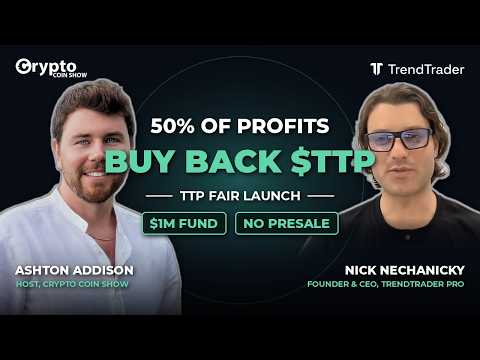 How a $1M fund is meant to fuel a token buyback: TrendTrader Pro’s Nick NechanickyOct 2, 2026
 Illia Polosukhin on NEAR’s privacy features and AI agents in 2026Oct 1, 2026
 How Robinhood built its own blockchain to control compliance and feesSep 29, 2026
 Geo Protocol founder Yaniv Tal launches Geo Debates, its first productSep 28, 2026
 How Brave is expanding beyond ad blocking with Drew PotterSep 27, 2026