
Shehram Khattak / Trust Wallet
Trust Wallet adds stocks, perps, and prediction markets
In this episode
Most crypto wallets are still just storage. Trust Wallet just added tokenized US stocks, perpetual futures, and prediction markets — all non-custodial, all on mobile. SELF-CUSTODIAL TRADING is no longer a contradiction, and Trust Wallet's General Counsel breaks down exactly what changed.
Shehram Khattak, General Counsel at Trust Wallet, joins Ashton Addison on Blockchain Interviews. Trust Wallet has surpassed 220 million downloads across 100+ blockchains, hit $1 billion in perp volume within 40 days of launching on Hyperliquid, and became the builder by volume on the network in its first weeks. Shehram explains how Trust Wallet integrated Hyperliquid's HIP-4 prediction markets as the first major wallet to do so, what bStocks means for someone who wants to trade tokenized NVDA, TSLA, and SPCXB 24/7 with dividends handled automatically onchain, and why the Trust Wallet Agent Kit — which lets AI agents execute trades on a user's behalf — is the next frontier for self-custody.
- Trust Wallet has surpassed 220 million downloads and achieved $1 billion in perpetual futures volume within 40 days of launching on Hyperliquid.
- Trust Wallet operates as a self-custody platform that does not execute orders, distinguishing it fundamentally from centralized exchanges.
- Trust Wallet integrated Hyperliquid's HIP-4 prediction markets and became the builder by volume on the network in its first weeks.
- bStocks enables 24/7 trading of tokenized US stocks like NVDA and TSLA with automatic onchain dividend handling through self-custody.
- Trust Wallet's Agent Kit allows AI agents to execute trades on behalf of users while maintaining self-custody principles.
Chapters
Related coverage
 Blockaid tracks 8,800 malicious GTA VI tokens draining wallets on launch dayNov 19, 2026
 Apple and Google patch wallet-targeting exploits as crypto attacks accelerateNov 10, 2026
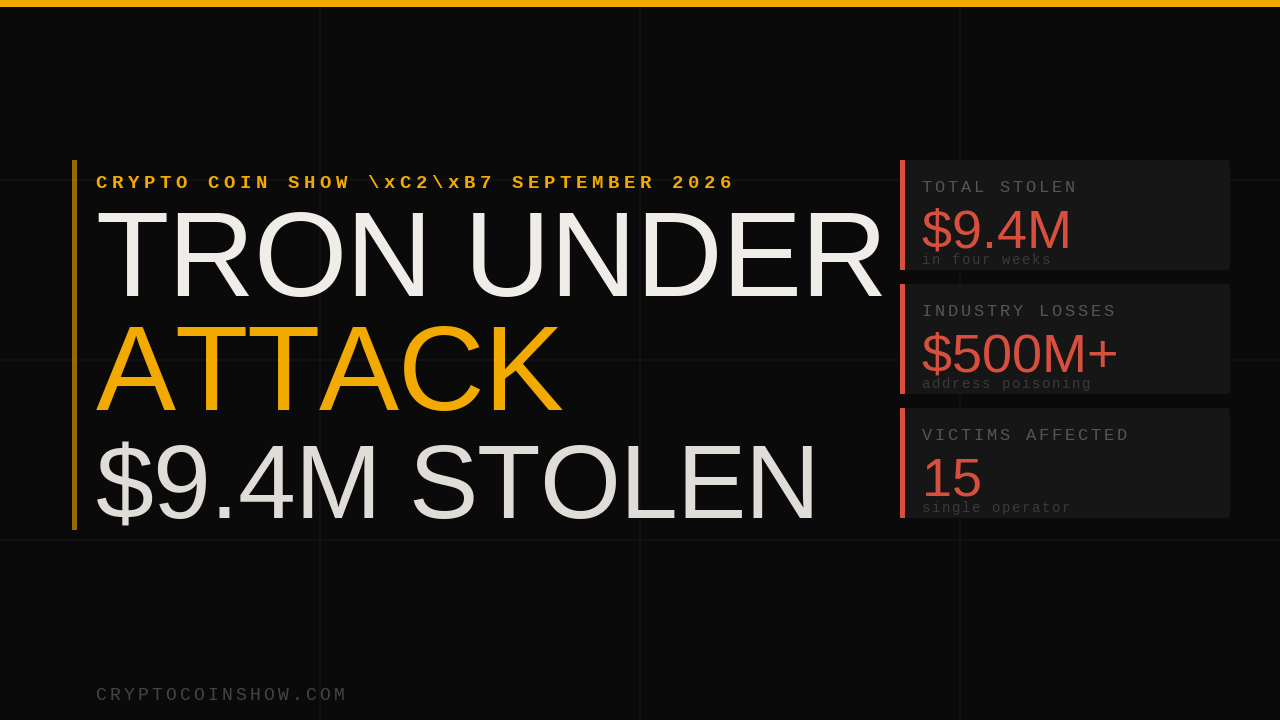 Tron wallet providers get called out as address poisoning attacks spreadAug 27, 2026
 CZ Says Software Wallets Avoid Risks Seen in Trezor LeakAug 14, 2026
More interviews
 Quantum computers could crack Bitcoin keys by 2028, says Postquant Labs CEONov 24, 2026
 0G Labs' Michael Heinrich on cheaper open AI modelsNov 19, 2026
 Why Wall Street is moving toward 24/7 trading in 2026Nov 13, 2026
 How Wallet V is letting AI agents trade while keeping your keysNov 10, 2026
 How Silent Payments Keep Your Bitcoin PrivateNov 9, 2026
 How XYO is building proof in a world of AI fakesNov 5, 2026